
Years ago, I was about 100,000 words into writing a novel when I got stuck. Really stuck — I didn't know what came next.
I wandered. I walked. I thought about it. I talked to other people.
Then I read Stephen King's On Writing and discovered that he'd reached a similar impasse while writing The Stand. He struggled mightily with it until he discovered something:
Theme.
What was the story actually about?
That question unlocked something in me.
I realized that my novel was about loyalty. I hadn't consciously decided to write a novel about loyalty — but somehow, for 100,000 words, I'd been digging up an artifact buried beneath the earth without completely understanding what I was uncovering. Once I saw it, everything clicked into place. There was a line, and I could follow it.
That experience has colored most, if not all, of my life since. I believe stories are about something — not merely plot, not character arcs, not technique, but something underneath all of that. I believe there's an authentic expression waiting to be discovered: an artifact in the earth. And as creators, we can choose to stay true to that artifact, or not.
We don't have to. We can force things, manufacture spectacle, decide what we want the audience to feel and manipulate the story until we get it. We can chase surprise for the sake of surprise. We can do what Game of Thrones and countless other stories have done and simply lose the fucking line.
But to the poet, to the artist, to someone interested in creating something alive...
There is a line.
A story.
A truth.
And sometimes you have to be willing to wait for it.
Dig for it.
Listen for it.
Find it.
This doesn't mean the resulting story is going to be for everyone. Liking it isn't a requirement for it to be true — that's an important distinction.
You can dislike the characters. You can dislike the style. You can wish the story had gone somewhere else. But sometimes, underneath your preferences, you can still feel: Yes. That's where this needed to go.
And you can feel the opposite too: wrongness. Not wrong in some larger cosmic sense, not wrong as in the universe has made a mistake — wrong in the story, wrong in the moment. The beat gets off. Something has been imposed that doesn't belong there. And sometimes you can't even explain why.
You can just fucking feel it.
I've gotten pretty good at finding the line in stories. And I've discovered that it's right there in my life too, if I care to look for it.
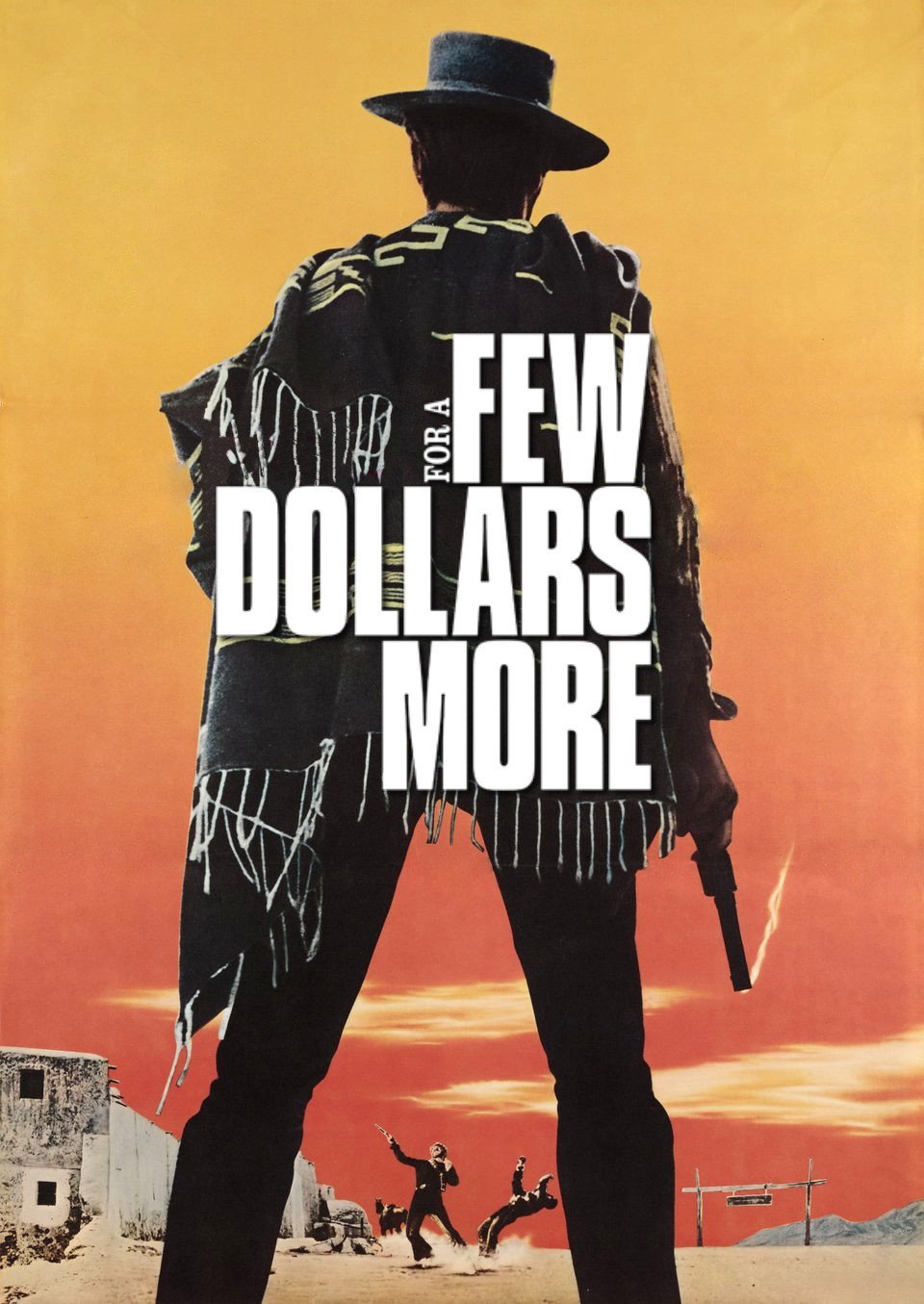
Which brings me, somewhat unexpectedly, to Sergio Leone. I'd somehow made it 57 years without ever watching The Good, the Bad and the Ugly. I finally watched it, and by the time it ended, I was blown away. Leone found the line. So I became curious, and instead of moving forward, I went backward and watched the movie he'd made immediately before it: For a Few Dollars More.
And last night...
Hot damn.
He did it again.
The fascinating thing is that the two movies don't do it the same way. They don't need the same things. They don't have the same emotional architecture.
For a Few Dollars More slowly puts pieces on the board that don't initially seem to belong together. Two bounty hunters. A vicious outlaw. A bank robbery. A pile of money. A strange musical watch. Then another watch. A woman from the past.
And underneath what seems like a straightforward Western, something else gradually reveals itself. By the ending, everything narrows: the money isn't really the story, the bank isn't really the story, even the bounty isn't really the story.
And in one simple revelation—
"She was my sister."
—the artifact comes out of the earth.
Suddenly, you understand what story you've actually been watching.
Then Clint Eastwood does something wonderful. He doesn't finish Mortimer's story for him — he restores fairness. He gives Mortimer his gun. And essentially:
Now finish your story.
That's the line. That's where it had to go.
And what's fascinating is that The Good, the Bad and the Ugly doesn't need anything like that. There isn't some hidden revelation explaining Blondie. There isn't a secret childhood connection between these men. There doesn't need to be. Because that was what that story needed.
Different artifact. Same artist.
And that's what fascinates me about Leone now. People can imitate his style — the giant close-ups of weathered faces, the long silences, the landscapes, the gunslingers, the music, the strange mixture of humor, violence, and myth. That's the easy part.
What you can't copy is the thing underneath it: the ability to see the line, to recognize the true artifact of the story waiting to be uncovered, to trust it, to follow it. And, maybe most importantly, to know when you've found the ending and have the courage not to fuck it up.
Bravo.