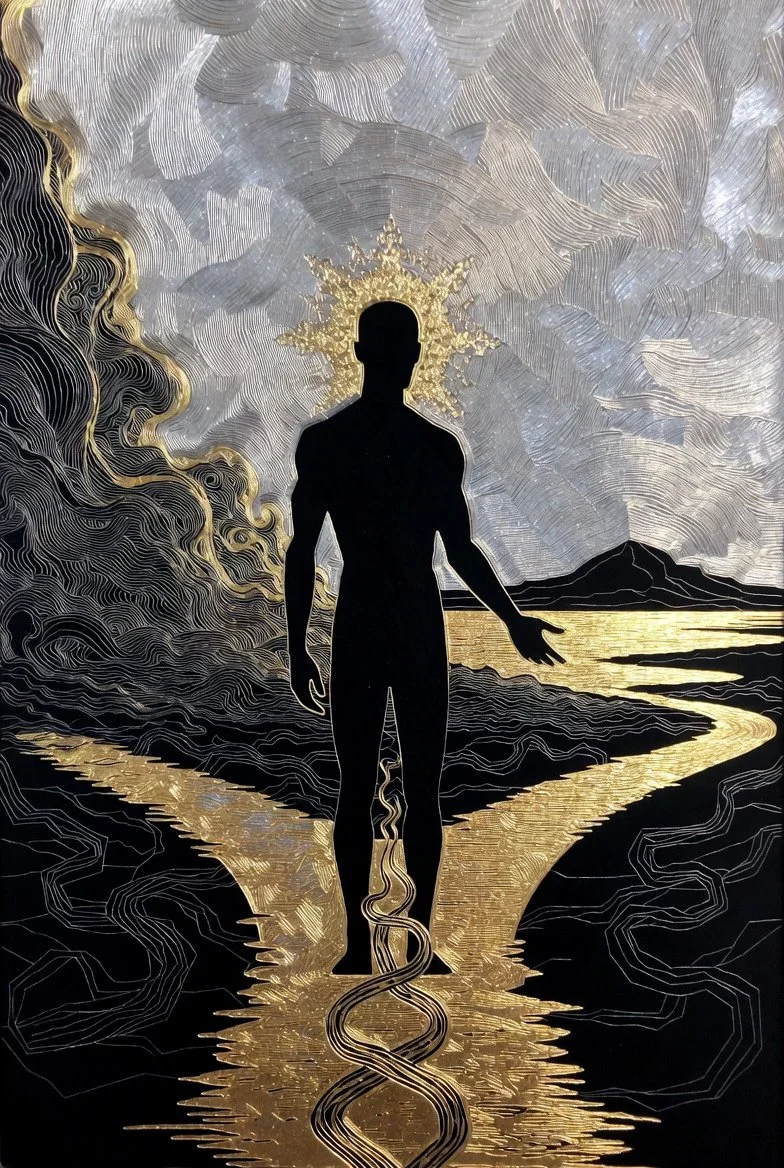
Mercy (After Freeze)

Mercy (After Freeze)

The key ingredient to getting the most out of storytelling
is putting yourself inside the story.

So put yourself here.

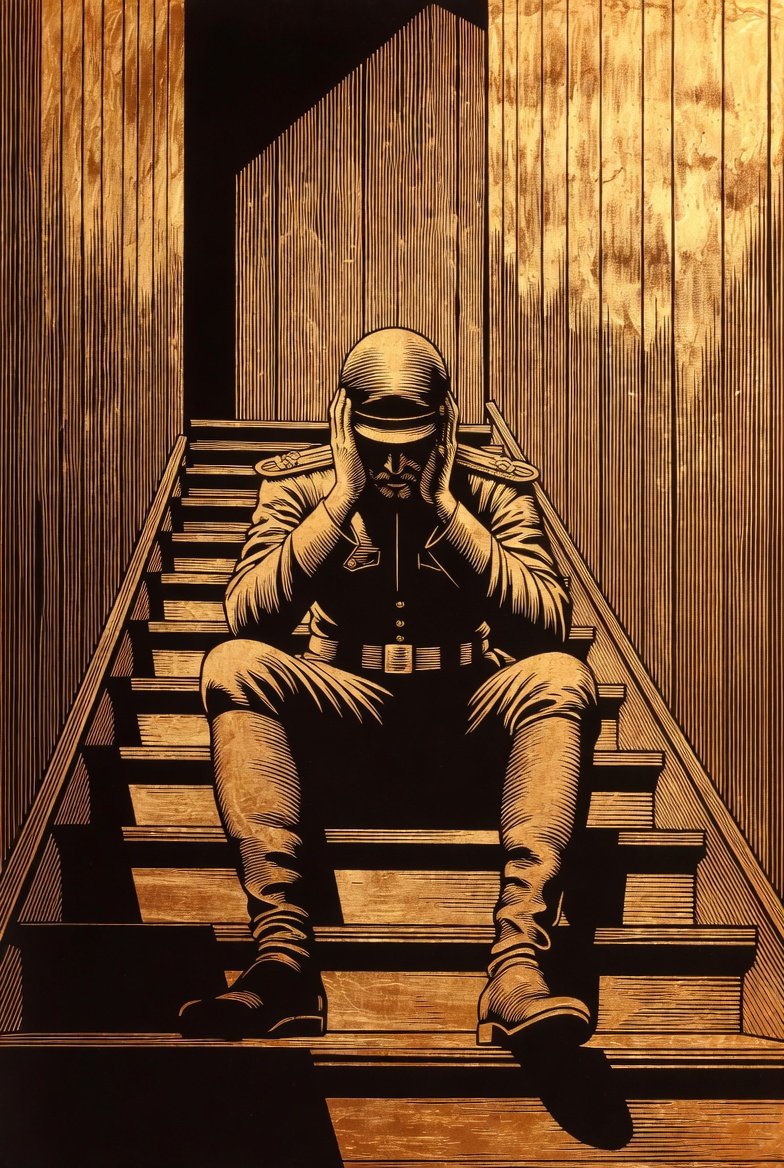
You’re on the stairwell.
You’re frozen.

A man is killing your friend upstairs.
You want to move.
You want to help.

You are not morally deficient.
You are not choosing evil.

You are so afraid your body will not move.

You may never have felt fear like this before —
may not have believed it was even possible.

But here you are.

Frozen.

Your companion is killed.

And the man who did it walks past you on the stairs.
He doesn’t even kill you.
He just leaves.

He’s the same man you let go earlier.
Your mercy.
Your choice.

And now you’re left with something worse than death:

Shame.
Self-loathing.
Humiliation.
The knowledge that you froze.

You argued for mercy earlier.
But it wasn’t wisdom — it was idealism mixed with fear.
You wanted to be good more than you wanted to face reality.

Now reality has answered.

So what do you do next?

Because this is the real question.
Not “What went wrong?”
But “What now?”

Freeze leads somewhere no matter what.

Either:

Freeze → Shame → Self-Judgment → Collapse

or

Freeze → Movement → Return → Integration

Self-judgment keeps the freeze frozen.

So if you’re on that stairwell, the answer is simple.
And brutal.

Move.

Move your body.
Do something.
Anything that restores motion.

I’m increasingly convinced that most human suffering can’t be solved by thinking alone.
You’ve already thought it to death.

Now it’s time to move.

Peter Levine doesn’t say “talk it out.”
He says: orient, mobilize, complete the interrupted action.

In plain language:

You froze.
You didn’t die.
Now move.

So mercy isn’t permissiveness.
It’s this:

“I forgive myself by moving again.”

That’s not weakness.
That’s discipline.

That is mercy with teeth.

Tomorrow, I’ll talk about a different kind of mercy —
the kind Frodo shows —
and what ultimately happens to Upham.

Freeze

Freeze

Two years ago, I blew out my knee in a skiing accident.

About six months ago, I went rock climbing with friends and my daughter.
I was nervous about the knee, but started up an easy route.

And then something happened.

I froze — about a quarter of the way up.

I rested, tried again, and made it halfway…
then froze again.

A third attempt — three-quarters of the way up —
and I froze once more.

I’ve rock climbed before.
Before the injury, I made it to the top.

So what happened?

I’ve always had some fear of heights, but this was different.
This was a full freeze response.

I suspect it had something to do with the knee injury —
the trauma of falling, of getting hurt, of losing trust in my body.

Yesterday I wrote about courage.
And courage did show up here — I kept trying.
Each time, I went a little further.

But each time, I still froze.

And freezing leaves a terrible taste in the mouth.

That’s why the character of Corporal Upham in Saving Private Ryan haunts me.

Upham argues for mercy for a captured soldier.
Later, that same soldier returns and kills one of Upham’s companions —
while Upham freezes on a stairwell, unable to move.

That scene enrages me viscerally.

And yet… I’ve frozen too.

Sometimes dramatically, like on the climbing wall.
Other times in smaller ways — not fully showing up, not speaking, not acting.

Depression itself can be a form of freeze.

What’s important to understand is this:
no amount of self-judgment fixes a freeze response.

Upham wants to help his companion.
He wants it desperately.
But no amount of willpower can make his body move.

That’s what makes the scene unbearable.

This is terrifying for any person to contemplate —
because all of us carry hidden traumas that can surface at the worst possible moments.

I remember a small moment from my childhood.

In 1981, my mom was at a grocery store and scratched a “scratch and win” card.
She won $10 and lit up with joy.

A woman nearby said bitterly,
“Why are you so happy? You’re rich. You don’t need $10.”

My mom froze.

Tears welled in her eyes.
She hurried out of the store, dragging me with her.

Years later, she still carried regret —
not because the comment mattered,
but because she had frozen and said nothing.

So not all freezes are dramatic Upham moments.

But almost all freezes — big or small — leave behind the same residue:
regret, shame, self-loathing.

Yesterday I wrote about courage and said something harsh but true:
that some deaths happen on the battlefield,
and some happen quietly inside.

But what happens after a freeze?

What happens when you don’t rise?
When your body betrays you?
When you hate yourself for it?

Because here’s the truth most men don’t want to face:

Most men aren’t afraid of dying.
They’re afraid of freezing when someone they love needs them —
and then having to live with themselves afterward.

And that leaves us with the real question:

What do we do next?

Northern Courage

Northern Courage

Last Friday I shared a long-form essay about something I’ve been wrestling with privately.
It felt scrapbook-worthy — a moment in the unfolding story.

This week, for fun and for truth, I’m revisiting that essay in smaller pieces.
Partly because our lives themselves are drafts.
We write, revisit, revise, discover new layers, and keep going.

Our thoughts aren’t always to be trusted —
but they are meant to be examined.

So today, I want to talk about Northern Courage.

The core idea is simple, and severe:

There are fates worse than death.

Tolkien shows us this in Théoden’s speech at the Battle of the Pelennor Fields.
The Riders of Rohan stand on a hill, staring down an army that vastly outnumbers them.
They know the truth.

They cannot win.

And yet — they ride.

Not because they’re optimistic.
Not because they believe in a miracle.

But because they believe in Northern Courage —
the ethic that says some ways of living, and some ways of dying, are preferable to others.

To turn back would be to die already.

Courage here isn’t positivity.
It’s not hope.
It’s meaning.

It’s an orientation toward life that says:
how you meet what is inevitable matters.

You see this same ethic in the Samurai’s code of honor.
In Socrates, who could have avoided death but chose not to betray his principles.

Some people call that foolish.
Others recognize it immediately in their bones —
because they know there are things worth dying for.

And beneath that recognition is something even older and more uncomfortable.

A primal truth.

Because the opposite of riding isn’t just fear —
it’s freeze.

And that leads to the confrontational question beneath it all:

Is there anything worse than cowardice?

We’ll talk about that tomorrow.

For now, here’s where this lands for me.

Each of us — me included — will stand on a hill one day,
looking down at a force that vastly overpowers us.

We’ll know that moving forward is foolish.
That it may end in failure.
That it may cost us everything.

And still…

there will be a moment when courage calls.

All of us will stand where Théoden stood.
All of us will see certain defeat.

And in the story of our lives, it will matter
whether we ride anyway.

That moment has already happened to me.
It will happen again.

The only real question is:

What will my story be?

Christmas Got Me Yesterday

Christmas got me yesterday.

Not in a dramatic way.
In a quiet, sneaky way.

I was pulling out the ornaments — many of them handmade by my mom, Jan, who died in 2009. She was a spitfire. I really liked her. I still miss her.

And then Christmas did what Christmas does.

It brought up my estranged son.
It brought up the family we tried to build.
It brought up the future I once believed in — the one that didn’t fully arrive.

That’s the real sadness.

Not just loss.
Unspent love.

Love with nowhere to land.

And here’s the thing — I don’t want to stop feeling this.
I don’t want to numb it or bypass it or “be positive.”

But I also don’t want Christmas to ambush me every year and turn fond memories into a low-grade ache.

What I realized is this:

This isn’t a therapy problem.
It’s a ritual problem.

Right now, the memories arrive without orientation, so they turn into heaviness instead of reverence.

So I’m trying something different this year.

A simple seasonal ritual I’m using

Once.
Early December.
That’s it.

I light a candle. No phone. No music.

I choose a few ornaments:
• One my mom made
• One that reminds me of my kids
• One that represents me from that era

I hold them — not to analyze, just to feel.

And I speak out loud. No story. No fixing.

“Jan, I miss you. You mattered to me.”
“Asher, I love you. I still carry you.”
“I honor the family we tried to build.”
“I forgive myself for not being omnipotent.”

Then, as I place each ornament, I say one sentence:

“You belong here.”

And when I’m done, I blow out the candle and say:

“This is enough for this year.”

That part matters.

It tells my nervous system:
This memory has a place.
It doesn’t need to haunt.
It doesn’t need to spill everywhere.

The result?

I still feel the sadness — but it’s softer.
Cleaner.
More like love than regret.

The memories don’t disappear.
They become blessings instead of weight.

So yes — of course Christmas hits me every year.

But this year, I’m meeting it on my terms.

And that feels… way better.

Afternoon Check In Cold Plunge

Afternoon check-in.

After I work out, I take a cold plunge.
Today was different.

Usually I use one of two strategies:

Endure — override the body.
Hold still. Breathe. Brace.
Make it not feel so cold.

Distract — leave the body.
Music. A conversation. Anything to pull my attention elsewhere.

Both work.
Both build toughness.

But both keep me slightly split from experience.

Today I did something else entirely.

I stayed.
I felt.
I didn’t leave the sensation, and I didn’t fight it.

I didn’t try to make the cold go away.
I didn’t outsmart it.
I didn’t brace against it.

I let the cold be cold.

And something in my body learned this:

I can feel intense things and not die.

That’s the same skill I was writing about this morning.

Upham froze because he couldn’t stay present with terror.
Théoden rode because he could stay present with death.
Frodo showed mercy because he could stay present with risk.

I stayed in the cold because I could stay present with intensity.

Same muscle.
Different arena.

Mercy

Good Friday morning,

I’m up early writing today’s scrapbook-of-my-life post.

And for the last hour I’ve been staring at a blank line.

Not because I have nothing to write about —
but because I have too much.
Too many threads, none of them obviously connected.

Whenever life feels random, I remind myself:
It’s never random.
The thread is always there —
it just hasn’t revealed itself yet.

So when things feel murky, I don’t force clarity anymore.
I just write whatever is coming up, even if it makes no sense.
Later, it always does.

And the thing coming up today?

Northern Courage.

This old ancestral idea from England and Northern Europe.
The kind Tolkien breathed into the Riders of Rohan.
That moment at the Pelennor Fields where Théoden’s men look down at an impossible sea of orcs and know — with absolute clarity —

“We cannot win.”

And yet…

They ride.

Not out of stupidity.
Not out of self-destruction.
Not out of blind heroic nonsense.

But out of meaning.

This worldview that says:

There are things worth dying for.
And there are fates worse than death.

This is masculine transcendence.
Not bravado. Not chest-pounding.
A clear-eyed recognition of the cost —
and the willingness to give everything anyway.

A man becomes larger than his life by the way he meets his death.

It’s the same thing I teach inside the Sacred Rebel Masculine:

Death is coming.
So live in a way that makes it irrelevant.

And then… the contrast.

Remember Upham, the trembling translator from Saving Private Ryan?

He argues for “mercy” when they capture a German soldier at the windmill.
Not out of wisdom.
Not out of soul-depth.

But out of idealism.
Out of fear of getting blood on his hands.
Out of the desire to be moral rather than to do what reality required.

And later…
that same man returns and murders one of Upham’s companions.

While Upham freezes on the stairs, sobbing, unable to move.

That scene hits me viscerally every time.
Because that freeze —
that paralysis —
is every man’s nightmare:

“When the moment comes… will I act?
Or will I fold?”

This is encoded in us.
Ancestral.
Archetypal.
10,000 years of protector instinct waking up in the spine.

But here’s the part people forget:

Upham finds his courage.
His naïve mercy shatters.
His innocence burns away.
He awakens.

He steps forward.
He confronts the very man he spared.
He acts — calmly, clearly, not in rage, not in collapse.

This is the masculine initiation arc:

Innocence → Collapse → Awakening → Responsibility.

The same arc as Théoden’s ride:

“You will likely die.
But if you do not ride, you are dead already.”

Masculine courage isn’t the absence of fear —
it’s movement through fear.
Action despite fear.
Clarity in the teeth of fear.

**And now… the part that actually matters to me today.

The personal part.**

I’ve been wrestling with my own anger lately.
The protector in me.
The father in me.

In today’s world, it’s not “acceptable” to feel violent toward someone who hurts your daughter —
but that instinct is ancient and holy.

It’s not weakness.
It’s not immaturity.

It’s the Protector realizing he wasn’t there in time.
It’s love with nowhere to go.

And inside this emotional terrain I realized something:

Upham’s early mercy is NOT real mercy.
It’s fear wearing a halo.

False mercy is the desire to avoid conflict
while looking virtuous.

True mercy is something very different.

Because Frodo also spares a dangerous creature — Gollum —
but his mercy is cut from another cloth entirely.

Frodo knows Gollum might betray him.
He knows it may cost him everything.
He knows danger intimately —
he carries the Ring.

His mercy is not naive.
It is chosen.

True mercy comes from power, wisdom, and soul-depth.
False mercy comes from fear and innocence.

False mercy is self-protection.
True mercy is self-transcendence.

False mercy collapses.
True mercy bears the weight of consequences.

This is why the heart of a father breaks so violently:
because the question isn’t vengeance —
the real question is:

“Will I harden my heart?
Or deepen it?”

And this is where all the threads come together:

Northern Courage.
Upham's collapse.
Frodo’s mercy.
The father-protector’s rage.
The masculine initiation arc.

It’s the same truth expressed from different angles:

A man transcends himself in the moment he chooses courage over collapse —
and wisdom over fear.

Some things are worth dying for.
Some things are worth forgiving for.
And knowing which is which…
that’s the real initiation.

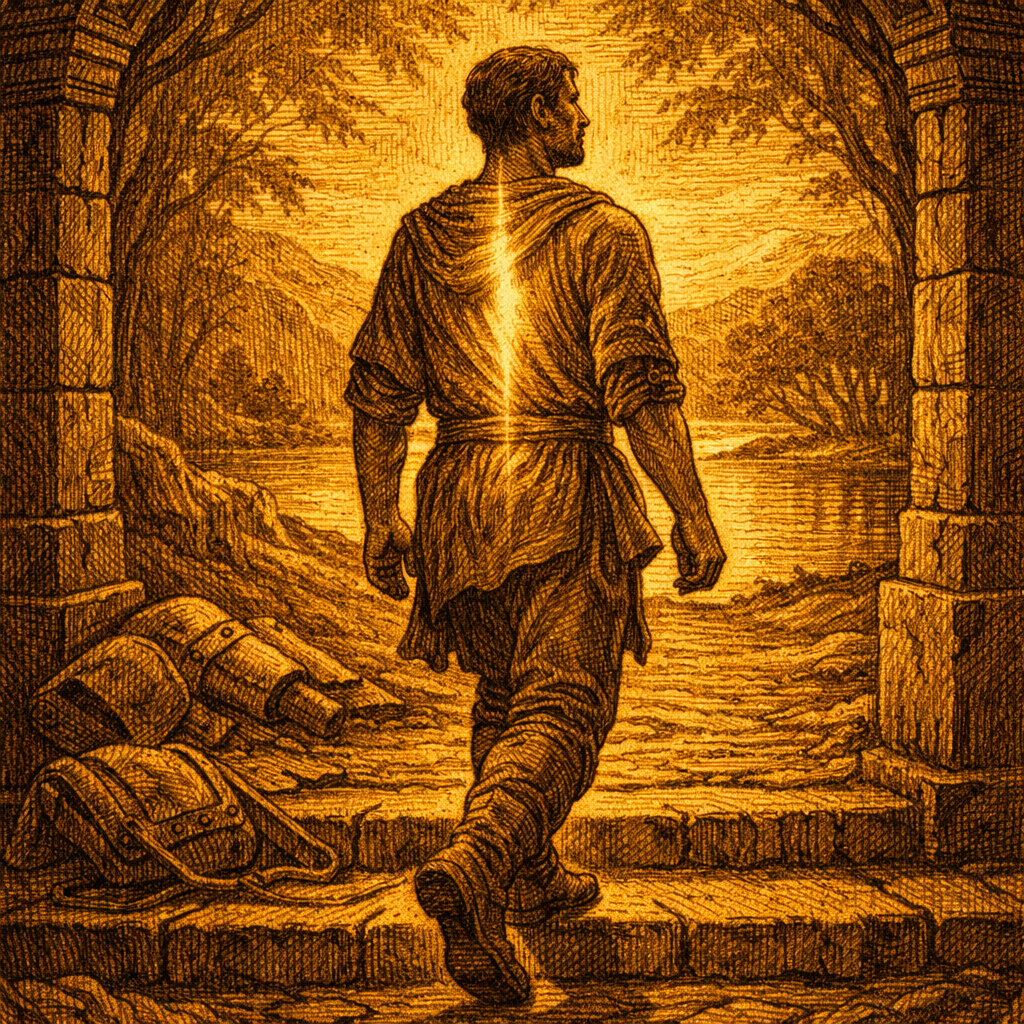
What Do You Want From Me?

What Do You Want From Me?

(A letter to the Divine)

It’s early again.

The world is quiet.

And I’m here — a man with dirt on his hands, a few scars on his heart, and a question I can’t shake:

What do You want from me?

Because I look around, and it seems You’ve already said it all.

The books are written.

The gurus have spoken.

The formulas, frameworks, and breathwork protocols — all there, all complete.

So what could You possibly need from me?

And then there’s that pause — that sacred stillness You love to use — and I feel it…

That pulse behind the words.

That knowing that You don’t want repetition.

You want embodiment, incarnation, a good story.

You didn’t give me these experiences so I could quote someone else.

You gave me fire and failure, death and devotion,

so I could translate You through my own scars,

through my own language of sweat, love, sex, and silence.

You want me to speak from within the wound, not about it.

To write from the inside of the storm, not the shore.

To show that polarity isn’t an idea — it’s a way of surviving the night and sanctifying the morning.

You want me to remember that no one else lived this version.

No one else buried a wife, raised three kids alone, left a church,

and then found You again in the silent space inside my heart.

You want me to write the story from inside,

to teach from the place that nearly broke me.

Because the world doesn’t need another teacher.

It needs another witness. It needs another incarnated one.

Maybe that’s what You want.

Not perfection.

Not a system.

But a voice that says,

“I have walked through hell with my eyes open, and God was there too.”

So… here I am.

Still learning how to listen.

Still willing to speak when You say, “Now.”

Still asking, softly —

What do You want from me next?

—Jason


Forgiveness and Mercy

5:00AM. Coffee.
Dark house.
Me, the keyboard, and the impossible topic: mercy and forgiveness.

Let’s start with the hardest question:

Are there unforgivable sins?

On earth, yes.
Some actions permanently sever the bond.
Some violations make reconciliation impossible.
Some things break trust so deeply the relationship never returns.
That’s real.
That’s human.
That’s protection.

But below that question lives a deeper one:

If something feels unforgivable… what does that mean for the one who was hurt?
Do you carry the rage forever because the act can’t be erased?
Or does forgiveness mean something else entirely?

What if forgiveness isn’t forgetting?
What if it isn’t healing?
What if it isn’t “moving on”?
What if forgiveness is simply refusing to carry the poison any longer?

Sip coffee.
Sit with it.

As a kid I burned ants with a magnifying glass and shot gophers with my .22.
Was that unforgivable?
Or was it just a boy learning what power is?
I’m not that boy anymore.
Growth is its own redemption.

Another sip.
Another question:

Is forgiveness selfish?

Maybe.
Maybe that’s the point.
Maybe it’s the moment you say,
“I don’t want to haul this weight through my life anymore.”

And can it go even further?

Can you offer help—mercy—to someone who doesn’t deserve it?
Why does Frodo spare Gollum?
Not because Gollum is good.
Not because he earned anything.
But because mercy keeps the future open.
Because mercy says,
“I will not become the thing that wounded me.”

Wrestle, wrestle, wrestle.
Early mornings.
Quiet conversations in the hidden chambers of the heart.

Soon I’ll rise and move my body.
Embodiment is always the balm—
the reminder that no matter how heavy the soul gets,
I’m still here.
Still breathing.
Still choosing who I will be.

—Jason
#SacredRebel #Forgiveness #Mercy #MasculineHeart #MorningPractice #Polarity #MythicMasculine

When the Heart Won’t Sit Still

When the Heart Won’t Sit Still

Some mornings the emotions don’t line up.
They don’t sit in meditation like monks — they swirl, wander, spill over the edges.

I did my Empty Heart Orientation today, and instead of silence, I found weather:
wind, heat, old tenderness, new fire.
Grief next to gratitude.
Joy brushing up against unease.

For years I thought this meant something was wrong.
Now I know better.

A moving emotional landscape means the system is waking up.
It means nothing is being suppressed.
It means the feminine inside is finally free enough to move.

The work isn’t to calm it.
The work is to hold it — without tightening, without needing it to resolve.

Some days the heart sits still.
Some days it dances barefoot and knocks things over.
Both are holy.

#SacredRebel #RelaxedAliveness #EmotionalWeather #MasculinePresence #FeminineFlow

Relaxed Aliveness

Relaxed Aliveness

I walked into the studio and saw all the women gathered on the floor — pillows, blankets, feet tangled, laughing so hard they could barely breathe.

No structure holding it together — just feminine delight taking over the room like a rising tide.

A few of them were even tickling each other with their toes — that mischievous kind of sisterhood that only appears when the body finally feels safe.

This is what we’re really building.

We talk about “growth” like it’s all shadow work and intensity.

Sure — the work is heavy sometimes.

It has to be.

You can’t unfreeze a lifetime of armor with shallow breathing and good vibes.

But the RESULT of the work? This laughter. This. Women laughing so hard they can barely breathe because they finally don't have to hold the world together.

People think I sell intensity.

What I actually sell is relaxed aliveness.

If you want to know why we gather — it's for this: women free enough to laugh again, men grounded enough to hold it, and a tribe remembering how to be human together.

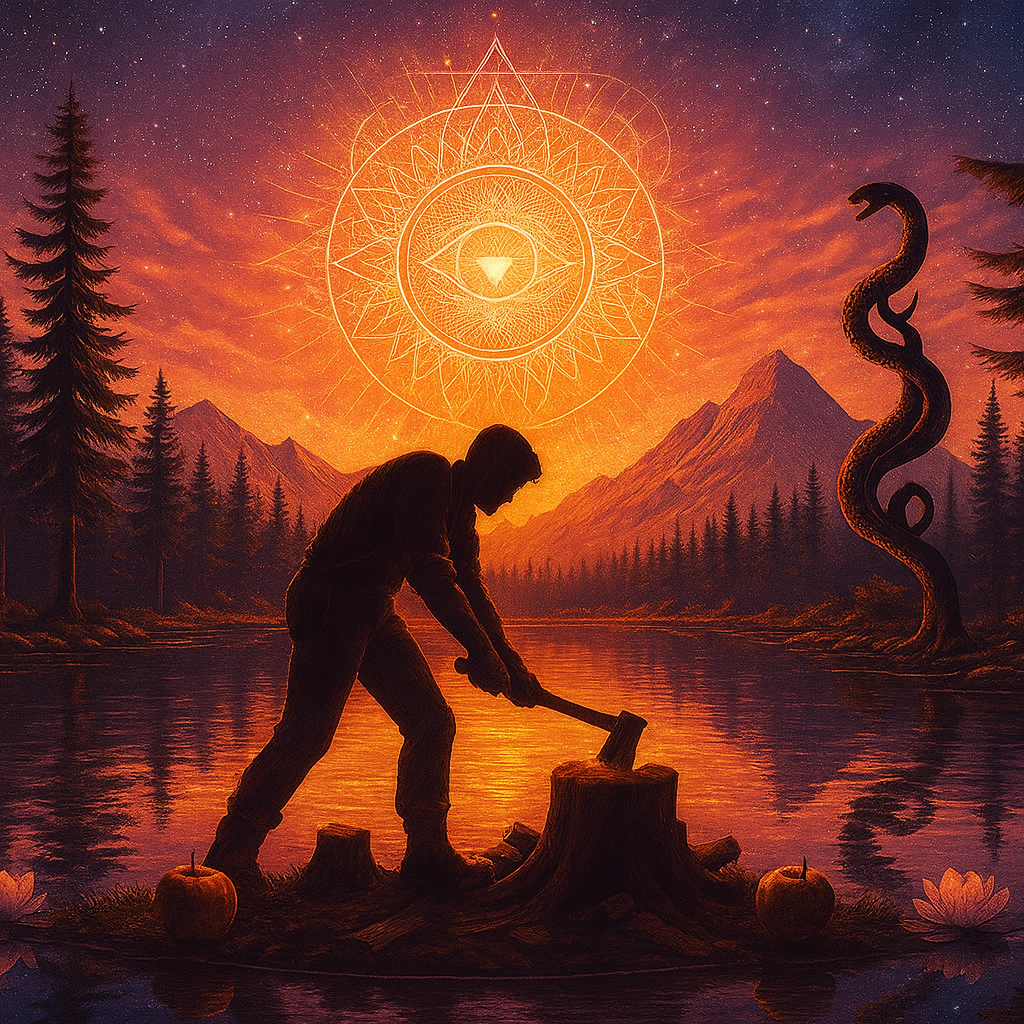
Chopping Wood

Before the circle: chop wood, carry water.
During the circle: No Mind, No Effort, All Just Is.
After the circle: chop wood, carry water.

It’s Monday after the circle.
I look at my hands and I see enlightenment in the simplest truth of all:

the work remains.

Back to the body.
Back to the tasks.
Back to the life right in front of me.

Because the moment the fire fades, the real practice begins.

The Passion That Burns Clean

The Passion That Burns Clean

Some people will tell you your fire is too much.
Some will say it scorched them.
Some will rewrite ten years of friendship as ash.

But on the mat of an MMA gym, dripping in sweat and doubt, I once told my coach:

“Maybe I need to tone it down.
Control my energy.
Dial back the intensity.”

He shook his head.

“No. Don’t dim your fire.
Anchor it.
Your passion will burn sometimes —
but that fire is also your genius.
In love and in war.
Your heart is open.
Guide your flame from there.”

I’ve learned something lately:

My fire isn’t the problem.
Unspoken truth is.
Delayed resentment is.
Standing too close without saying a word is.

Yes — my passion burns.
Yes — it leaves marks.
And yes — it’s the same fire that protects, creates, loves, and awakens.

I’m not here to shrink.
I’m here to burn clean.

Instant Feedback

In our workshops, we teach something simple but radical:
feedback must be immediate.
Not an hour later. Not tomorrow. Not after resentment builds.
Right now.

Feedback keeps the energy alive instead of stagnating.

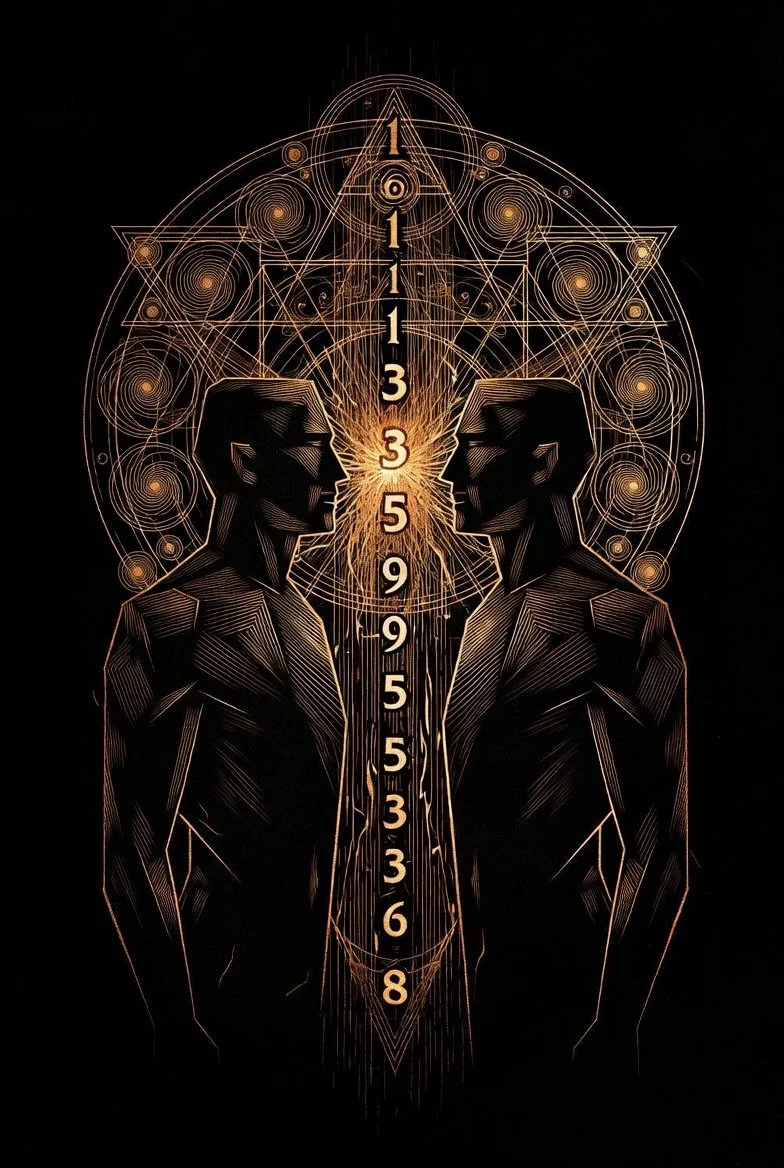
That’s why we use a numeric loop:
1, 1, 1, 3, 5, 9, 9, 5, 5, 3, 6, 8!

It’s not about perfection.
It’s about calibration.

Most people wait too long to speak.
They swallow it.
They avoid it.
They hope it will pass.

But friendship dies when you bury your feelings alive.

Instant feedback keeps the channel open:

  • “More of that.”

  • “Less of that.”

  • “That just landed.”

  • “That missed.”

No story.
No drama.
Just truth.

It’s not about control.
It’s about connection.

If you want a deeper relationship or a deeper life:

Stop waiting for the perfect moment.
Respond now.
Adjust now.
Speak now.

Instant feedback isn’t criticism.
It’s a gift.
And if you don’t give it, it turns into poison.

Too Much - Not Enough

You can be too much for people.
And that can stain your subconscious in ways you don’t even notice.

And you can be not enough — no matter what you do, they still aren’t satisfied.

Somewhere between those two extremes, you have to find your center.
Your balance.
Your actual self.

The path of becoming who you are — without bending for approval — can be brutal.
Sometimes it feels like the world, or even your dearest loved ones, are conspiring to tell you:

“You’re too much.”
or
“You’re not enough.”

But somewhere in the middle of all that noise… there’s just you.

Unfiltered.
Unapologetic.
True.

You get to discover who you are, and then be that — without shrinking and without apology.

Stop apologizing for love.
You are love.

Perfect Day Thanksgiving

Well... that was the perfect day.

Four days of hard work and design prep put into one feast, and we pulled it off.

Perfect meal... with perfect people. From 5:00AM in the morning working with my amazing wife... And getting the privilege of seeing my daughter Amethyst and Jade, my son Riley, our friend Porter and his son Koa, and especially time with Dr. Stanchfield and Peggy, Jennie's amazing beautiful magical parents.

Then a comatose nap... like I was OUT, watching football while my son Riley cleaned up.

Then a fun game of Wyrmpan, and I finally won!

Followed by me, Riley and Jennie watching the PERFECT movie: The original 2010 How to Train Your Dragon. Toothless and Hiccup.

Thanksgiving is for gratitude, but often you have to try and find it. But it found me this year, and this evening I felt overwhelmed with the sheer appreciation of my life. I am lucky. I am unlucky. But I manifested and created THIS, and I'm really happy I did.

There is nothing better... I mean it... nothing better than working hard and then celebrating together as a family.

It's what I do.

If you sink into the flow of right action, two fears will block you.
The first hits before you even take a step—questioning where the path might lead.
The second comes after you see the destination—resisting what it will demand or what it will give you.
Both are the same root fear: losing who you were.
The only way through is to move anyway.