
First, you're practicing building understanding instead of collecting facts. You aren't memorizing "gravitational waves travel at cc." You keep attacking the statement until you can reconstruct it: Wait—does Earth make them? Why doesn't a static Sun make them? What happens to orbital energy? What would Brand actually observe? That kind of reasoning is transferable. The subject happens to be black holes; the mental activity is learning how to notice contradictions, interrogate assumptions, and revise models without simply accepting authority.
Ai Makes you Dumb and Lazy
REFUTATION! OBJECTION! ORDER IN THE COURT!
I've been watching a rash of anti-AI posts lately.
And I'm noticing something that bothers me more than disagreement about AI.
It's the certainty.
Actually, it's more specific than that.
It's moral certainty attached to disagreement.
AI makes you dumb.
AI makes you lazy.
If you use AI, you're part of the problem.
Sometimes it goes even further—not merely disagreement about a technology, but judgment about the character of the person using it.
Objection.
I have evidence.
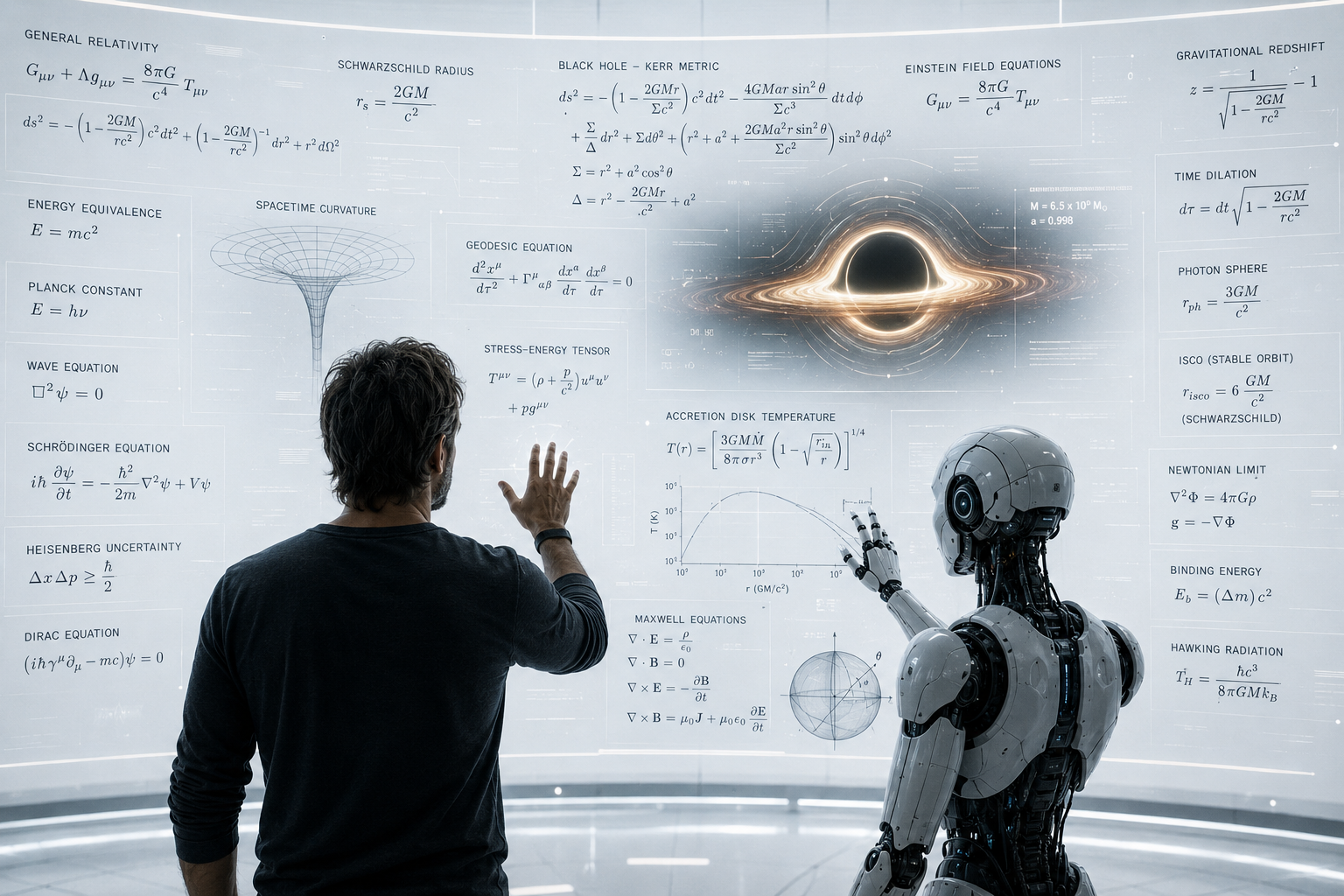
I'm taking a course on Black Holes and Relativity through Peterson Academy. Pretty advanced physics, my friends.
Each lecture is about an hour.
And lately, for every hour of lecture, I've probably spent another three hours talking through it with ChatGPT.
I'm not skipping the fucking lecture.
I'm doing MORE lecture.
I stop. I question. I make predictions. I get things wrong. I argue. I ask why. I explain what I think is happening and see if I've actually understood it. We follow connections into photons, nuclear physics, gravity, relativity, fusion and quantum mechanics.
Then I return to the course knowing considerably more than I would have otherwise.
Could somebody use AI to skip the lecture and have ChatGPT take the test for them?
Of course.
That would be using AI to avoid thinking.
I'm using it to think more.
And that's the distinction getting murdered by all this black-and-white certainty.
AI has dangers. AI has limitations. AI can absolutely be used lazily.
But complicated things deserve complicated thinking.
And no.
You don't get to define my character because I've chosen to work with this technology.
You don't get to tell me that my lived experience didn't happen.
I'll stand here and tell you exactly what happened.
AI didn't replace my curiosity.
It gave my curiosity somewhere to go.
So when someone tells me with absolute certainty that AI makes people stupid, lazy, or somehow morally deficient?
OBJECTION.
Evidence not admitted.
I have a witness.
Me.
Family Dinner
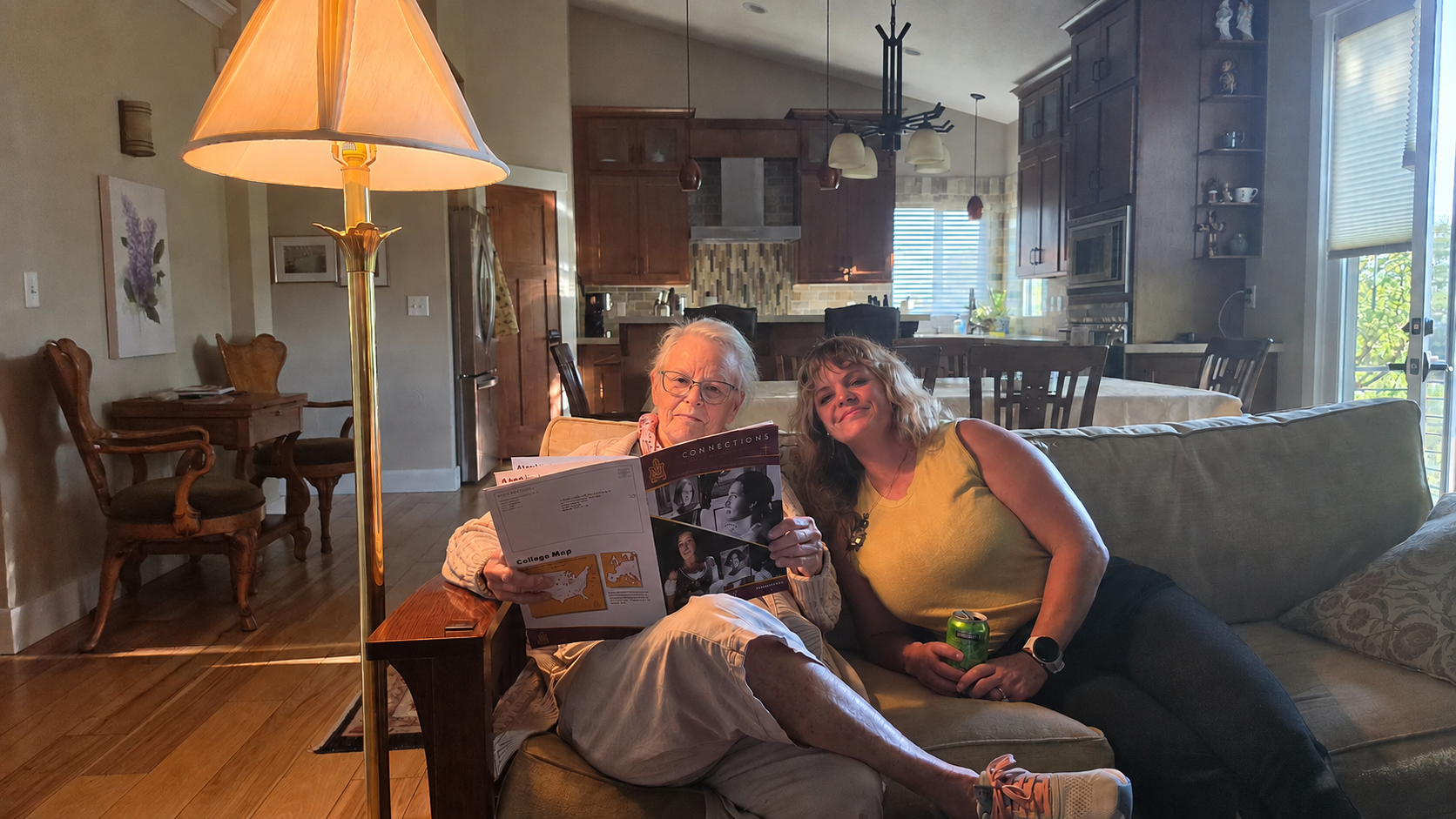
Every Tuesday evening I get the privilege of eating dinner with these two beautiful ladies — Jennie and her mom, Peggy.
We do takeout, and my son Riley, Dr. Stanchfield, and often Amethyst and Jade are there as well.
Nothing fancy. Just a quiet little family tradition.
And I find myself appreciating these evenings more and more — the blessed time I get to spend with these magical people, sitting around a table, eating dinner, talking, laughing, and simply being together.
Some of the best parts of life really are this simple.
To Jennie and her mom, Peggy — two of my favorite people in the whole world. ❤️
Black Hole Thinking
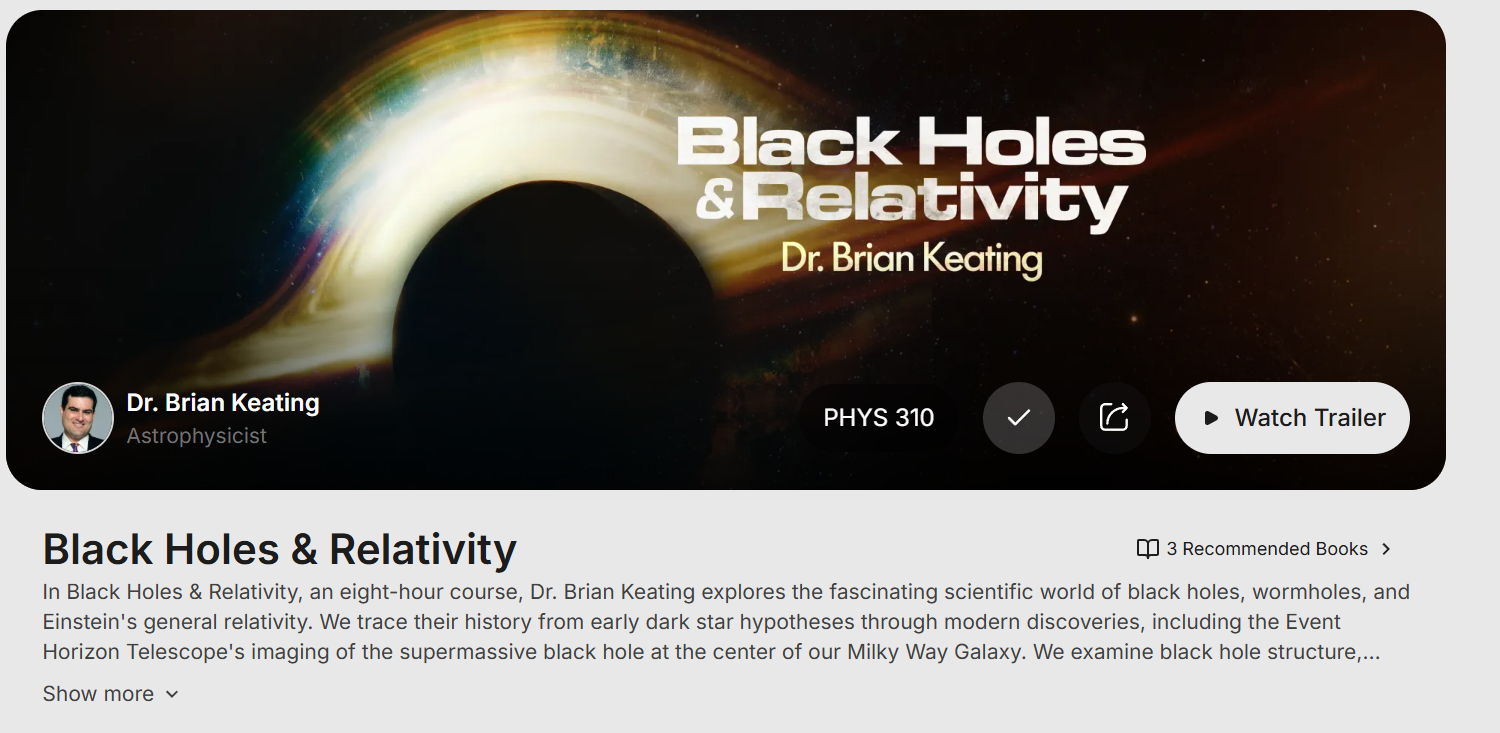
I've been taking a course called *Black Holes & Relativity* by astrophysicist Brian Keating.
And yesterday, somewhere between electrons, E=mc², nuclear bombs, hydrogen, radioactive decay and why the hell iron sits near the sweet spot of nuclear stability, I realized something interesting about how I'm using AI.
I'm not using it to avoid thinking.
I'm using it to **think harder.**
The course mentioned that electrons are elementary particles.
Okay.
But somewhere in my head I'd always associated electrons with electricity. Electricity is energy. So how can an electron be a particle with mass AND somehow be energy?
That question bothered me.
So I opened ChatGPT and started pulling the thread.
And I mean *pulling the fucking thread.*
What exactly is energy?
Is energy a substance?
When we say matter gets "converted into energy," what actually happened to the matter?
When uranium fissions, are the protons destroyed?
No.
They're rearranged into different nuclei.
So where does the energy come from?
Binding energy.
Okay, then why does smashing hydrogen nuclei *together* also release energy? Shouldn't binding them require energy?
And suddenly we're talking about nuclear stability, fusion, fission, iron, isotopes, deuterium, tritium, radioactivity, Chernobyl and what radiation actually IS.
None of that was planned.
I was driving around having a conversation and refusing to move past something until the model in my head actually made sense.
And that's becoming one of my favorite uses of AI.
The course is still the course. Brian Keating is still the astrophysicist teaching me physics. AI isn't replacing him.
It's sitting beside me while I learn and allowing me to say:
"Wait. I don't understand that."
"But if that's true, then wouldn't THIS also have to be true?"
"Okay, then explain this."
"Nope. Still don't get it. Start further back."
And I can keep doing that until something clicks.
That's profoundly different from the way most of us were educated.
Normally the lecture keeps moving.
The book keeps going.
The class ends.
And eventually you learn to nod at things you don't actually understand.
AI doesn't require me to do that.
I can stop the entire fucking universe at the electron and stay there until I'm satisfied.
And strangely, rather than making me intellectually dependent, I'm finding that this makes me more intellectually sovereign.
I don't have to accept something because an authority said it.
I can question it.
Test it.
Follow the implications.
Discover where my own assumptions are wrong.
And then go back to the original material understanding more than I did before.
That's not outsourcing my thinking! (which is the thing I'm trying to convey the most. Use Ai to get smarter, to think deeper, to understand more, and to practically improve your LIFE!)
I have a ridiculously patient thinking partner available whenever curiosity catches fire.
And apparently yesterday, curiosity caught fire somewhere around uranium-235.
How Does Ai Know?

My son Riley has been a little slow to the AI game.
Today he sent me this:
“Spent a silly amount of time trying to get a Windows-only game to work on Mac.
Finally said screw it, asked Gemini how to do it. 10 minutes later, it works.
Minor issue: mouse input was too slow even on max settings. Googled it. Searched Reddit. No one had ever asked about this.
Asked Gemini.
It knew exactly what was happening, why a Logitech mouse would have that problem, and the exact place in the files to find a specific folder with garbled code data in it, search for a value, and change a 1.5 to a 1.
Like magic, works perfectly.
Unreal. How does it know stuff if even I can't find it anywhere on Google?
Useful for something at least. 😁”
That last line made me laugh.
But his question is a good one.
How does it know something if you can't find the answer anywhere?
Because AI isn't just search.
Sometimes it has enough pieces of the puzzle to reason toward an answer that nobody has ever bothered to write down.
And sometimes that answer is buried in some obscure folder full of gobbledygook where changing a 1.5 to a 1 somehow fixes your mouse.
Ten minutes.
Problem solved.
Useful for something, at least. 😁
You Are Where You Are At
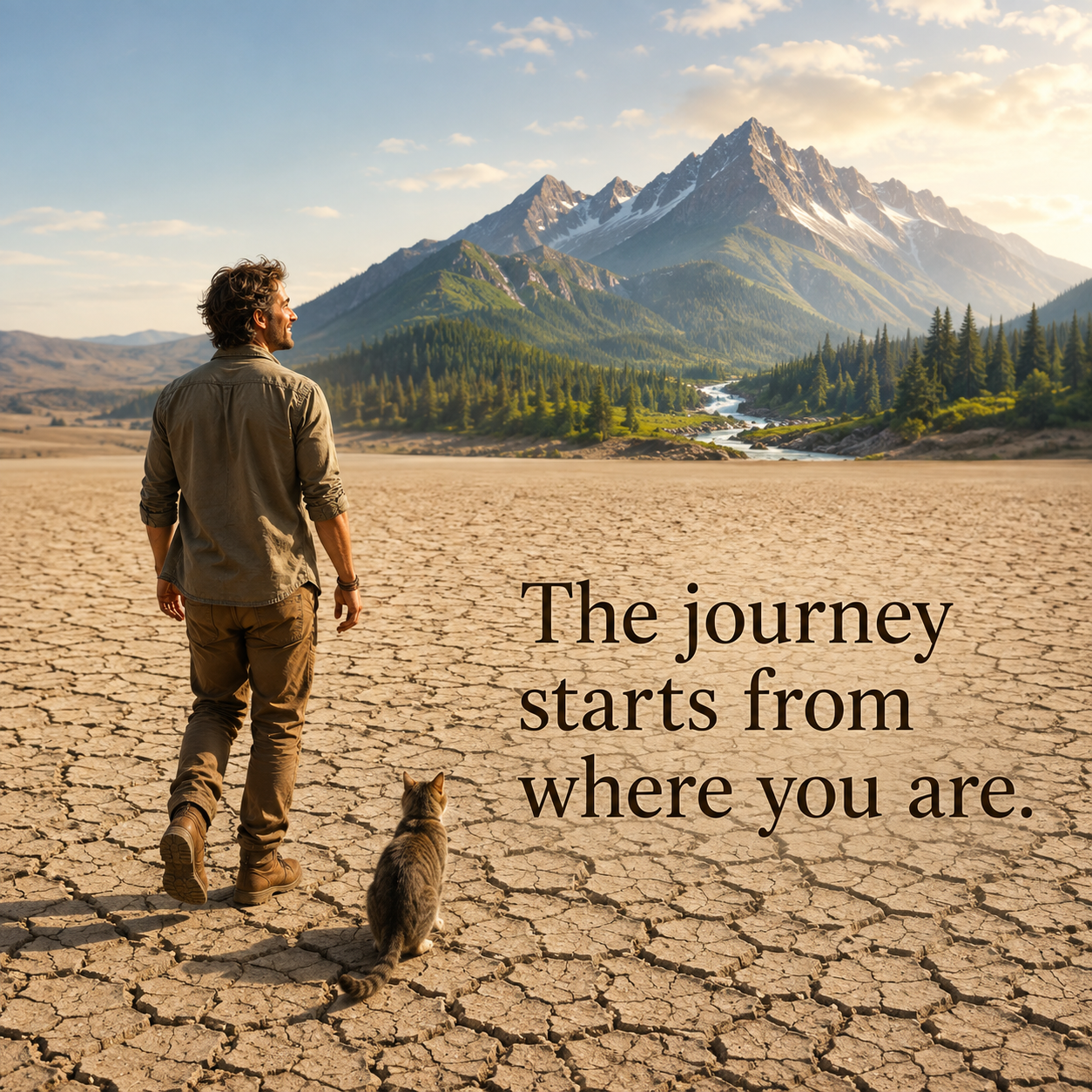
Journal Entry — August 18th, 2026
I calibrate most mornings, aiming up, with a series of practices, breaths, and journal entries. It’s a good time to get square. To settle into my incarnation.
One of the key elements that has improved my alignment practice is learning to start each morning from where I’m actually at.
Living by the code:
Stop fucking lying.
How do I feel in my body, spirit, heart, and mind?
How do I feel about my relationships? My finances? My work? My life?
We don’t run from these things. We don’t immediately try to change them. We start with where we are.
What are the facts?
And how do I feel about those facts?
No judgment. No worry. No story about where I should be.
This is where I am.
THEN we change our focus.
Then we aim up.
Because you can’t really calibrate until you know what you’re calibrating from.
We are where we are.
And from there, we begin to move. We calibrate up. We aim up.
And we begin the journey of satisfaction.
Spider Man - Brand New Day
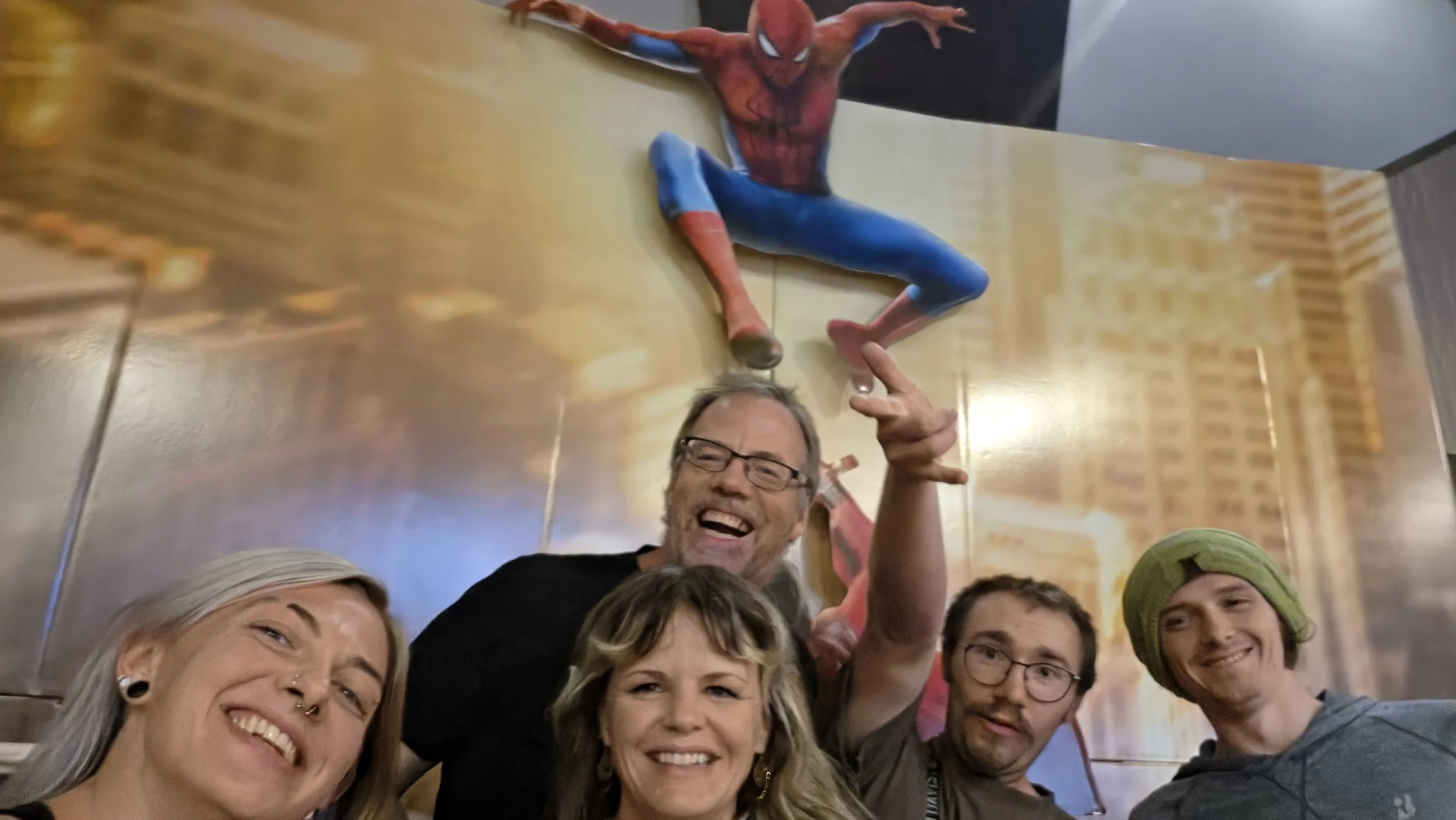
I'm About to Spoil a Movie You've Already Seen
[This essay contains spoilers for Spider-Man: Brand New Day. But probably not the kind you think. If you haven't seen the movie, stop reading. If you have seen it — and you really liked it — you might want to stop reading too. Because I may be about to spoil a movie you've already seen.]
The other night I saw Spider-Man: Brand New Day. And I loved it. Spider-Man was one of my favorite characters when I was a kid. I collected the comics. I eventually owned a comic-book store. Peter Parker has been slinging his way through my imagination for something like fifty years.
So I went into the movie ready to have fun. I did. There were moments that surprised the hell out of me. Moments that moved me. Moments that made me laugh. At least one moment that brought tears to my eyes. I walked out having really liked the movie, but also itching about something.
Then I woke up at three in the morning. Something was bothering me. Eventually I realized what it was. The movie had manipulated the shit out of me.
I've written before about something I call the line — the artifact buried under a story, the thing you dig for and follow instead of forcing. Sergio Leone found it twice, back to back, two completely different ways. For a Few Dollars More slowly puts pieces on the board that don't seem to belong together — two bounty hunters, an outlaw, a bank robbery, a strange musical watch, then another watch, a woman from the past — until one line makes it all snap into place: She was my sister. Suddenly you understand what story you've actually been watching. Mortimer has to face Indio. Not because Leone wants a good gunfight, but because everything the movie has uncovered about these men makes that confrontation inevitable. When Mortimer's gun is taken from him, Eastwood's character doesn't finish Mortimer's story for him. He gives him his gun. Finish your story.
That's the line. Spider-Man: Brand New Day showed me what the opposite looks like.
There's a surprise in Brand New Day I somehow managed not to have spoiled. Jean Grey is in the movie. When I realized who she was, I actually said "Holy shit" out loud in the theater — because her actions before the reveal aren't congruent with the Jean Grey I knew. This Jean is angry. Her sister has been captured by Damage Control, and Jean is willing to do increasingly terrible things to find out what happened to her.
Fine. I can lay aside the Jean Grey I grew up with and deal fairly with this one. A storyteller is allowed to surprise me — that's the job. Maybe this Jean is darker. Maybe she crosses a line nobody expected her to cross.
She does. She kills people. She takes control of a traffic officer's mind, walks him into oncoming traffic, and leaves him there. Then she reaches into MJ — who, because of the last movie, doesn't remember Peter at all — and makes MJ remember him. Peter can't believe it. Neither could I. For one glorious moment, something impossibly painful has been restored. Peter starts crying. I started crying.
Except it isn't restoration. It's a performance of restoration. Jean is inside MJ's head, and she understands exactly what a real reunion would mean to Peter — which is precisely why she's willing to fake one. She lets him have the moment on purpose, so taking it back does more damage than never giving it at all. Then she sends MJ falling from the building and leaves her there. Peter catches her. Of course he does — he's Spider-Man. But Jean didn't know he would. If he misses, MJ dies.
That's not a woman flirting with darkness. That's a woman who understands intimacy well enough to use it as a weapon, and does.
Now — I want to be fair here, because it would be too easy to call this bad writing and move on. There's a version of what happens next that isn't dumb.
Later we learn Damage Control has been torturing Jean's sister to exploit her powers, and killed her doing it. Peter doesn't know that yet when he finally captures Jean. He turns her in — believing, reasonably, that this is what you do with someone who's done what she's done. It's only afterward that he learns what Damage Control actually is, and goes back in to free her.
By the time he gets there, she's already freed herself. She's got the director cornered, shards of glass floating around him, and she's about to kill him. And that's the moment Peter says it: You're not a killer.
Which means — if you follow what he's actually asking for — he's not telling her to let the man go. He's telling her to do to the director exactly what Peter already did to her: hand him over, let the system deal with him. The same system Peter now knows tortures people to death. He's asking her to trust a process he's just spent the whole movie learning not to trust, using the same words that would've applied to what he already did to her.
That's a genuinely hard position to be in. What do you do with someone who's committed real, unforgivable violence when the system that would judge them is also monstrous — and you've already made that mistake once yourself? I'd have followed that movie anywhere.
But that's not the movie they made. Peter never seems to notice the contradiction he's standing inside — that he's asking Jean to do the very thing he now regrets doing to her. The line just gets said. The glass stops floating. The music swells. That's Peter caught inside his own contradiction and the movie not noticing — which is more interesting than what actually plays, because at least it would mean something was true. Instead: "You're not a killer."
She is. I watched her do it. He watched her do it.
That's the actual cheat, and it isn't a moral one — it's a storytelling one. The movie built two things that cannot both be honestly true about the same person twenty minutes apart. It needed Jean terrifying enough that the MJ scene would land — someone who can fake intimacy itself, cold enough to weaponize the one memory Peter would die for. And it needed Jean redeemable enough that "you're not a killer" would land too, ten minutes later, with strings swelling. It wanted both checks to clear. It never balanced the account.
They had a harder, better version sitting right there — a Peter who chooses her anyway, who has to carry the weight of choosing her anyway, and never gets the relief of a clean line telling him he was right to. Instead the movie reached for the clean line, because a clean line feels better in the moment than an unresolved one. That's spectacle. Effect first, truth wherever it lands after.
Every scene in that stretch works toward a feeling. And the feelings work — that's the maddening part. I cried when they wanted me to cry. I was shocked when they wanted me shocked. I was moved when they wanted me moved. I really liked the movie. But somewhere underneath all of it, I couldn't find the line, because the story wasn't following Jean anymore. Jean was following the story's beats. And those are not the same thing.
There's a temptation here to just bitch about bad storytelling — Marvel fucked it up, Hollywood sucks, movies used to be better. That's not interesting to me. What's interesting is the question underneath it: where do I do that to myself? Where do I decide what I want people to feel about me — wise, spiritual, profound, good — and then quietly bend the truth of my own story until I get it?
There's a line of authenticity running through a life the same way there's one running through a story — not some predetermined version of who I'm supposed to be, but what's actually here before I start bending it toward the effect I want. And spectacle isn't just a Hollywood problem. It's what happens when I perform the feeling instead of following what's actually true and letting the feeling come from that — the same trade the writers made with Jean Grey, just run on myself instead of a character.
I'm actually pretty good at creating experiences. I've spent years facilitating retreats, intimacy work, men's work, meditation — what I'd call peak experience. A great teacher can build a crucible where something becomes possible that wasn't possible before. But there's an important distinction I see more clearly now.
Creating an experience isn't the problem. Leone created the hell out of an experience — that final duel is constructed down to the second: the music, the silence, the watches, the faces. But he doesn't bend the truth of his characters to produce it. The effect emerges from the truth. It isn't manufactured ahead of the truth and imposed on top of it.
That's the distinction worth carrying into my own life. Because I'm going to lose the line sometimes. Of course I am. I'm going to perform. I'm going to want applause. I'm going to tell myself stories about who I am that make me feel better. And maybe the answer isn't to condemn myself when I catch it, and it isn't to pretend it's not there either. Maybe it's just: keep digging.
If I acted selfishly, don't rewrite the scene. If I manipulated someone, don't tell myself I'm not manipulative. If I was afraid, don't manufacture courage after the fact. If I was magnificent, don't shrink that either. See what's actually there. Authenticity doesn't mean discovering you're good — it means being willing to discover what's true. And truth isn't where the story ends. It's where transformation actually gets to begin.
Maybe that's what people mean when they say they "found themselves." Not that there's a perfect little authentic person waiting underneath everything to be uncovered — just a line. One we lose, and find, and lose again. We build spectacle versions of ourselves designed to get the applause, the followers, the approval, the likes. And sometimes those versions work.
Maybe the spectacle version gets a thousand likes. Maybe the true one gets one. So what? Liking it isn't a requirement for it to be true. Apparently that applies to stories. Apparently it applies to Jean Grey. And apparently it applies to me.
So thank you, Spider-Man: Brand New Day. I really enjoyed you. And then you pissed me off enough to teach me something. When you find something inconvenient in the story, don't rewrite what already happened just to get the ending you wanted. Follow it. Own it. Let it change what comes next.
And when you realize you've lost the line —
find it again.
For A Few Dollars More
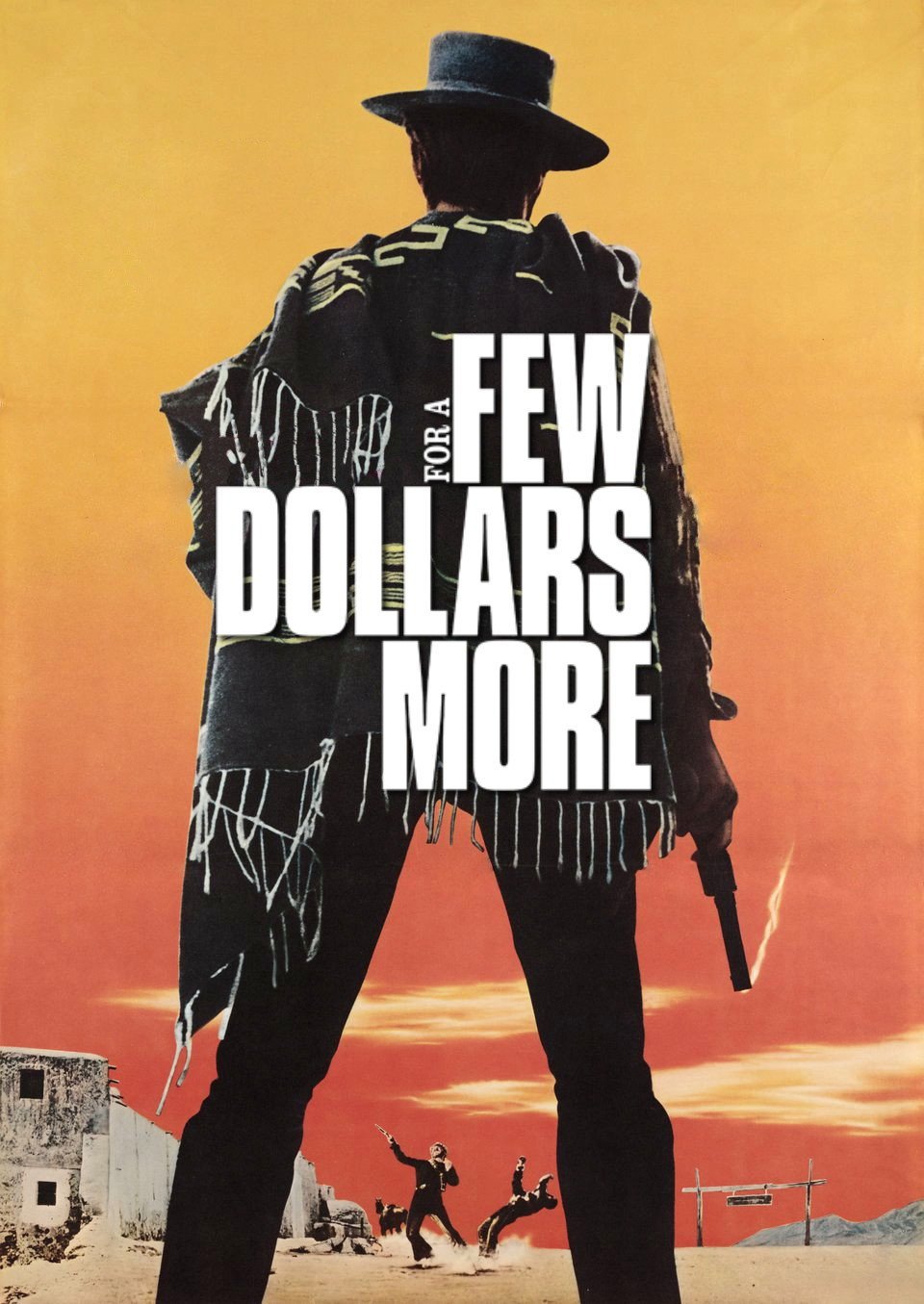
Years ago, I was about 100,000 words into writing a novel when I got stuck. Really stuck — I didn't know what came next.
I wandered. I walked. I thought about it. I talked to other people.
Then I read Stephen King's On Writing and discovered that he'd reached a similar impasse while writing The Stand. He struggled mightily with it until he discovered something:
Theme.
What was the story actually about?
That question unlocked something in me.
I realized that my novel was about loyalty. I hadn't consciously decided to write a novel about loyalty — but somehow, for 100,000 words, I'd been digging up an artifact buried beneath the earth without completely understanding what I was uncovering. Once I saw it, everything clicked into place. There was a line, and I could follow it.
That experience has colored most, if not all, of my life since. I believe stories are about something — not merely plot, not character arcs, not technique, but something underneath all of that. I believe there's an authentic expression waiting to be discovered: an artifact in the earth. And as creators, we can choose to stay true to that artifact, or not.
We don't have to. We can force things, manufacture spectacle, decide what we want the audience to feel and manipulate the story until we get it. We can chase surprise for the sake of surprise. We can do what Game of Thrones and countless other stories have done and simply lose the fucking line.
But to the poet, to the artist, to someone interested in creating something alive...
There is a line.
A story.
A truth.
And sometimes you have to be willing to wait for it.
Dig for it.
Listen for it.
Find it.
This doesn't mean the resulting story is going to be for everyone. Liking it isn't a requirement for it to be true — that's an important distinction.
You can dislike the characters. You can dislike the style. You can wish the story had gone somewhere else. But sometimes, underneath your preferences, you can still feel: Yes. That's where this needed to go.
And you can feel the opposite too: wrongness. Not wrong in some larger cosmic sense, not wrong as in the universe has made a mistake — wrong in the story, wrong in the moment. The beat gets off. Something has been imposed that doesn't belong there. And sometimes you can't even explain why.
You can just fucking feel it.
I've gotten pretty good at finding the line in stories. And I've discovered that it's right there in my life too, if I care to look for it.
Which brings me, somewhat unexpectedly, to Sergio Leone. I'd somehow made it 57 years without ever watching The Good, the Bad and the Ugly. I finally watched it, and by the time it ended, I was blown away. Leone found the line. So I became curious, and instead of moving forward, I went backward and watched the movie he'd made immediately before it: For a Few Dollars More.
And last night...
Hot damn.
He did it again.
The fascinating thing is that the two movies don't do it the same way. They don't need the same things. They don't have the same emotional architecture.
For a Few Dollars More slowly puts pieces on the board that don't initially seem to belong together. Two bounty hunters. A vicious outlaw. A bank robbery. A pile of money. A strange musical watch. Then another watch. A woman from the past.
And underneath what seems like a straightforward Western, something else gradually reveals itself. By the ending, everything narrows: the money isn't really the story, the bank isn't really the story, even the bounty isn't really the story.
And in one simple revelation—
"She was my sister."
—the artifact comes out of the earth.
Suddenly, you understand what story you've actually been watching.
Then Clint Eastwood does something wonderful. He doesn't finish Mortimer's story for him — he restores fairness. He gives Mortimer his gun. And essentially:
Now finish your story.
That's the line. That's where it had to go.
And what's fascinating is that The Good, the Bad and the Ugly doesn't need anything like that. There isn't some hidden revelation explaining Blondie. There isn't a secret childhood connection between these men. There doesn't need to be. Because that was what that story needed.
Different artifact. Same artist.
And that's what fascinates me about Leone now. People can imitate his style — the giant close-ups of weathered faces, the long silences, the landscapes, the gunslingers, the music, the strange mixture of humor, violence, and myth. That's the easy part.
What you can't copy is the thing underneath it: the ability to see the line, to recognize the true artifact of the story waiting to be uncovered, to trust it, to follow it. And, maybe most importantly, to know when you've found the ending and have the courage not to fuck it up.
Bravo.
Rose Thorn and Leaf
Bass Canyon Campout Journal
Sunday, August 2nd, 2026 – Rose, Thorn, and Leaf
Did we stay up a little late the night before?
Yes.
Yes, we did.
Seeing the sunrise has its advantages... and its disadvantages.
The advantage is the stillness. The magic. That quiet hour where the world seems to hold its breath and the light slowly returns.
The disadvantage...
...is how tired you are the next day.
But part of these gatherings is allowing beauty, connection, and aliveness to flow through you so completely that, every once in a while, you let go of ordinary constraints.
Like bedtime.
As Neil Peart once wrote:
*"We will pay the price... but we will not count the cost. And if love remains..."*
Around noon, running on very little sleep, the tribe gathered one final time for our closing rituals.
The most meaningful of them, for me, is something we call **Rose, Thorn, and Leaf.**
One by one, every person receives the full attention of the circle.
The Rose...
What was beautiful?
The Thorn...
What challenged you?
What hurt?
What stretched you?
And the Leaf...
What are you taking home?
What seed was planted here that you want to grow into your life?
I love this ritual because it gathers the entire weekend into one living tapestry.
The adventures.
The laughter.
The quiet conversations.
The victories.
The disappointments.
The unexpected gifts.
Everyone offers a different thread.
And somehow...
...they weave together into something much larger than any one person's experience.
Not everyone had a perfect weekend.
Not everyone experienced dramatic growth.
Sometimes these gatherings stir old fears.
Old wounds.
Old grief.
Sometimes they awaken things we weren't expecting.
But where better to meet those parts of ourselves than surrounded by people willing to simply witness them with love?
No fixing.
No rescuing.
No judgment.
Just...
"I'm here."
Sometimes that's enough.
After everyone had spoken, we sang one final song together.
Then we held a simple cord-cutting ceremony—not to separate from one another, but to release each person back into their own life with our blessing.
Free.
Loved.
Trusted.
Then...
The spell slowly dissolved.
People laughed.
Packed trailers.
Folded chairs.
Hugged one another.
Cleaned up camp.
Promised we'd stay in touch.
Life, ordinary life, quietly returned.
And maybe that's the point.
These weekends were never meant to become life.
They were meant to deepen it.
The Roses.
The Thorns.
The Leaves.
They don't stay at camp.
They come home with us.
They echo through the following days and weeks, asking us to keep living what we discovered there.
That is the work.
That is the gift.
And yes...
That is the price we willingly pay...
Though we never count the cost.
PS. - So that wraps up our Bass Canyon Campout series. It was a beautiful experience and I'm grateful for it and for everyone who came, I appreciate what you brought, the good, the bad, and the ugly. It was all good.
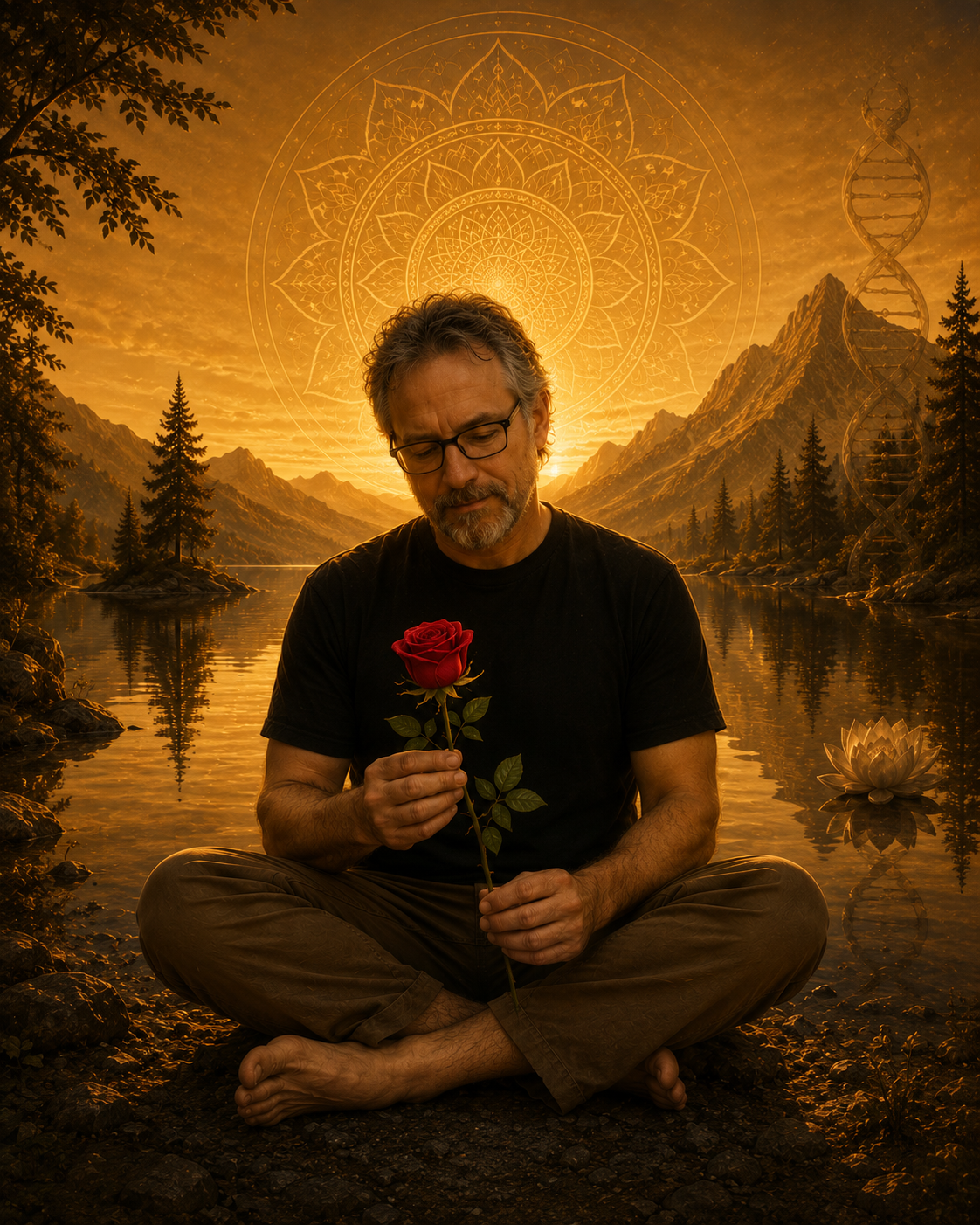
Image forged from a variety of uploades, prompts and edits with ChatGPT. It gave me more hair than I actually have... which makes me smile at the absurdity of it all.
Feedback
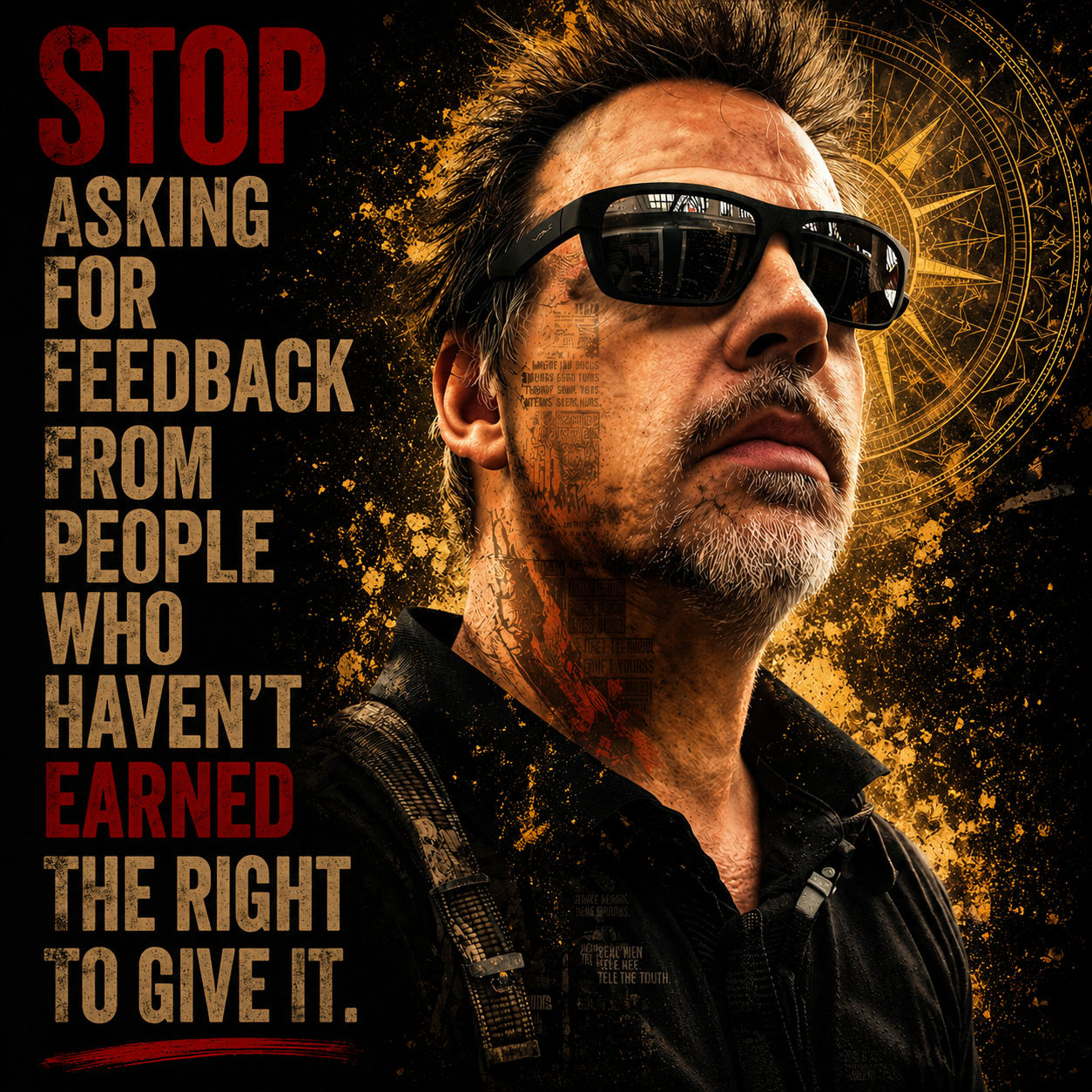
Stop asking for feedback from people who haven't earned the right to give it.
Saturday Sacred Theater
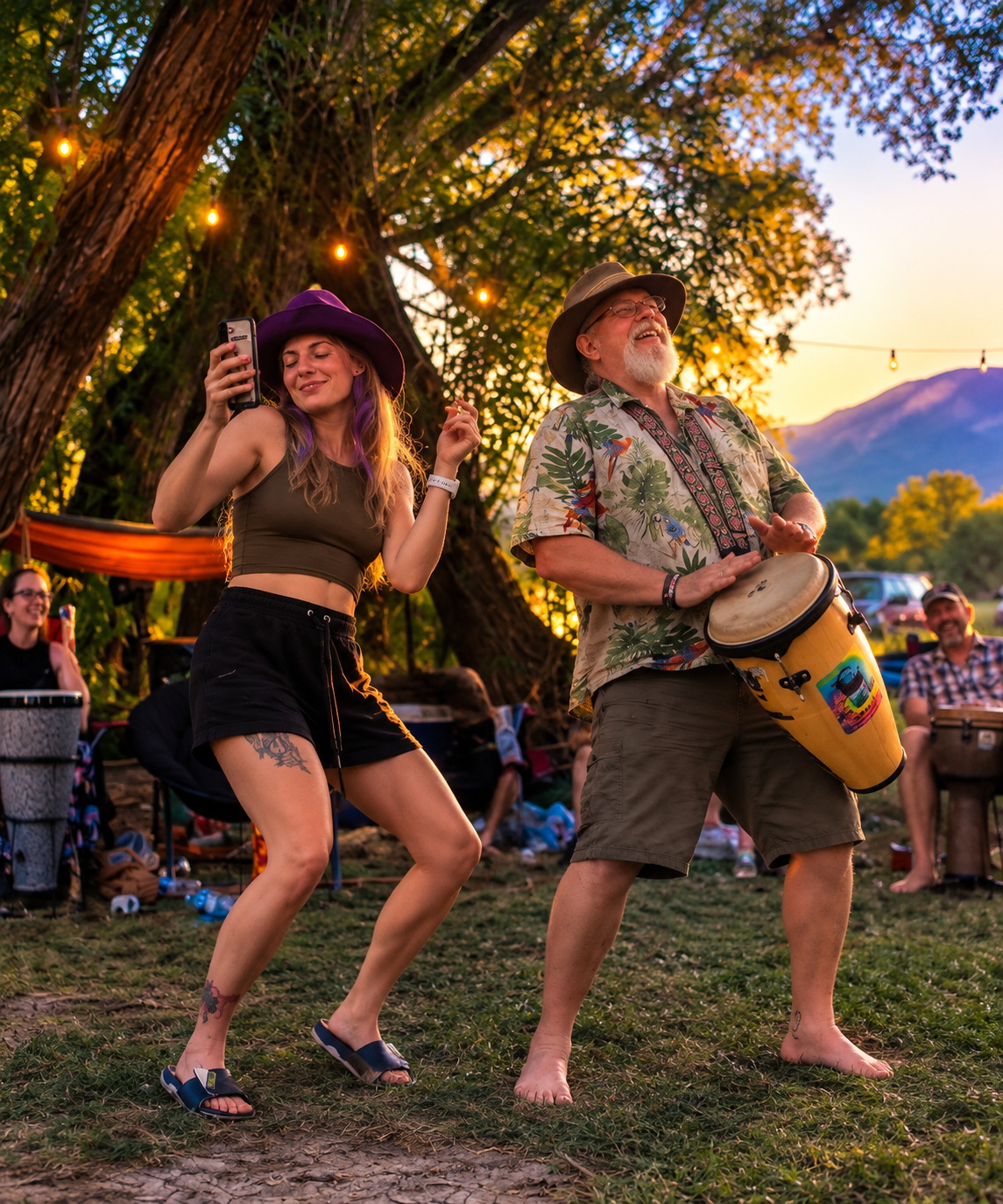
Bass Canyon Campout Journal
Saturday, August 1st, 2026 – The Tribe
Somewhere during Saturday, I realized something.
This wasn't my camp anymore.
It belonged to the tribe.
We played Cornhole.
I didn't create the fun.
People did.
We cooked two giant Dutch ovens full of potatoes so we could break bread together.
Nels contributed rhythm, bringing dozens of drums, along with his insight, leadership, and humor.
Carl contributed movement, embodiment, and sound, building beautifully on what Nels had begun.
And then...
Sacred Theater.
I contributed the container.
Everyone else filled it.
Jennie contributed challenge to the men.
Amethyst contributed beauty through dance.
Porter contributed vulnerability.
Tom contributed the deep vibration of Ohm, inviting all of us into meditation.
Jim contributed honesty and letting go.
Chrystal gave us a window into her heart.
Dave plucked at our emotions with a simple piano song.
I even had the chance to share the story of the two tiny kittens I found at the dump.
And so many more gave...
Gifted...
Contributed...
Can you see what's happening?
No one is the star.
Everyone became indispensable.
Maybe even more importantly...
Everyone was aiming up.
Some offerings landed more deeply than others.
Some people were nervous.
Some had practiced for weeks.
Others simply stood up and spoke from the heart.
None of that mattered.
What mattered was that every person was reaching toward something a little higher than where they had started.
And together...
That lifted all of us.
And EVERYONE contributed attention, honoring each gift with their breath and awareness.
"Is it your turn?"
If it's your turn...
You get the room.
That's what Sacred Theater is.
The room belongs to whoever is standing in the middle.
Everyone else has one simple job.
To witness.
That's basic respect.
After Sacred Theater, I bounced from person to person, circulating life.
Checking.
Connecting.
Listening.
Introducing.
Encouraging.
I didn't need the attention.
I gave the attention.
Watching conversations deepen.
Watching strangers become friends.
Watching a tribe become a tribe.
Somewhere during Saturday...
It stopped being my story.
It became the tribe's story.
This is what we made together.
The Good, the Bad, and the Ugly
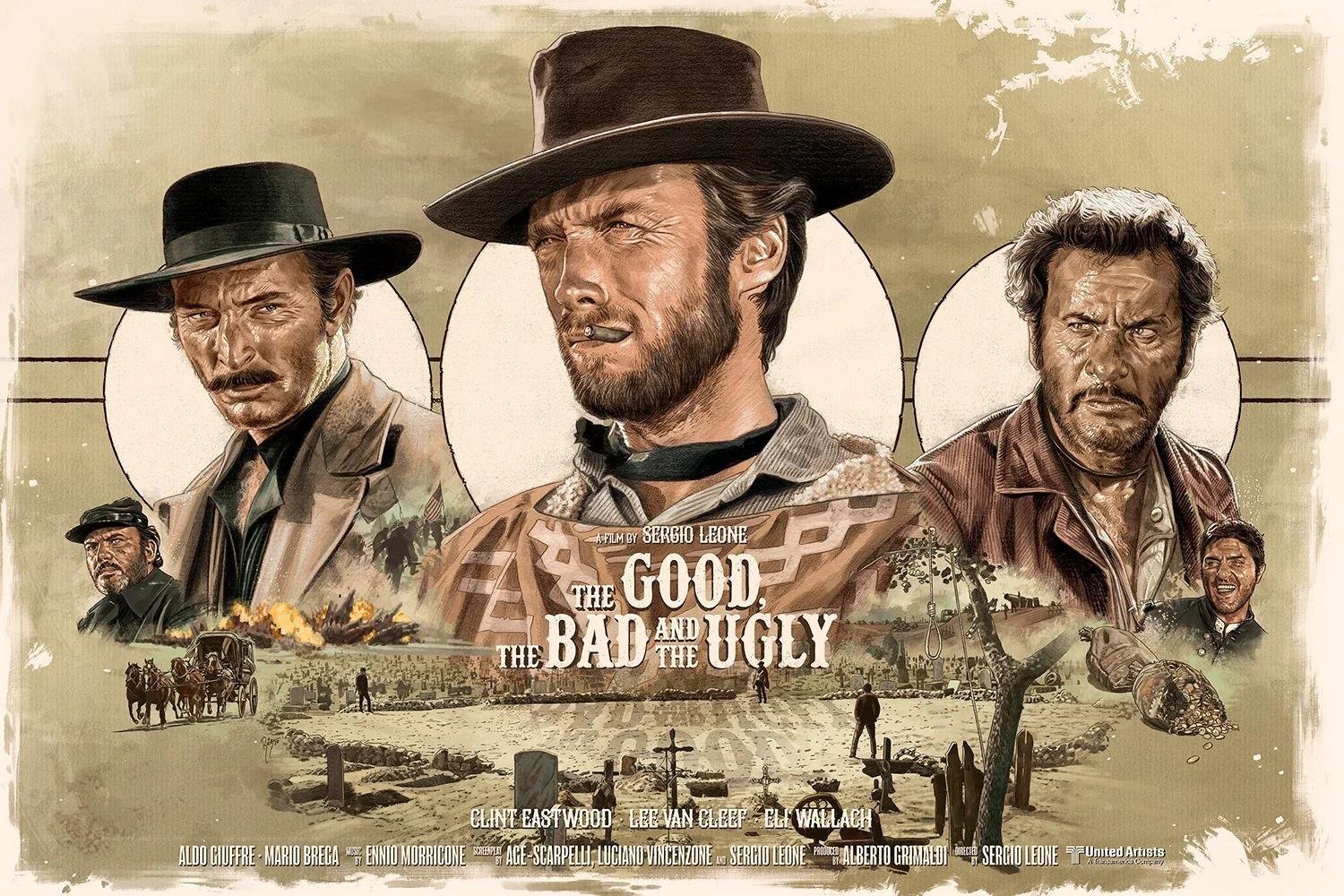
It Was Time
[This is an essay about The Good, the Bad and the Ugly. It's not a review. It's an essay, and as such has full spoilers.]
Somehow, despite being 57 years old and having watched a ridiculous number of movies in my life, I'd never seen The Good, the Bad and the Ugly.
Obviously I'd heard of it.
Clint Eastwood. The music. The squinting. The guns.
So a few nights ago, I decided it was finally time. About an hour in, I was thinking:
This might be one of the most boring fucking movies I've ever watched.
Okay, that's overstating it. But not by much.
It was beautiful. I could see the artistry immediately. Sergio Leone's enormous landscapes. The extreme close-ups. Ennio Morricone's incredible score. Just looking at Van Cleef was almost enough to save the beginning.
But I had one gigantic problem: I didn't give a shit about anybody. I didn't CARE.
The "Good" wasn't particularly good.
The "Bad" was definitely bad.
And the "Ugly," Tuco, was an insane, lying, backstabbing bastard.
Everybody wanted money… and that didn't seem like a great motivation for me to spend 3 hours with these assholes.
There was no Frodo trying to save the Shire. Nobody trying to save their family. No nobility at all.
Just three guys chasing $200,000.
One of the things I do with ChatGPT is we watch movies together. It's an entertaining, educating, philosophical debate between a human and a computer about some of the biggest movies, themes, and characters in the world.
So I kept talking to ChatGPT while I watched, which turned out to be half the fun.
I'd pause the movie and say things like:
"Why doesn't Blondie just fucking shoot Tuco?"
Because seriously. Tuco would capture Blondie. Blondie would escape. Tuco would capture Blondie again.
And eventually I'm yelling at the television:
SHOOT THIS FUCKER AND GO HOME.
Chat kept patiently explaining:
"This isn't really tactical realism. Leone is operating in myth."
And that was really helpful… to reconsider the story as a great mythological undertaking.
MYTH.
I started accepting that, seeing, and actually enjoying. A cannonball miraculously saves somebody. Tuco survives some ridiculous catastrophe. Clint Eastwood lights the fuse of an actual fucking cannon with his cigar and fires it at Tuco.
And strangely, once I stopped demanding realism from the movie, I started understanding its language, its rhythm, its voice — and somewhere in there, I started caring about Tuco. (This one really blew me away… how Leone pulled this off was amazing!)
There was a scene where Tuco meets his brother, who's become a priest. For the first time, underneath all that noise and greed and violence, I saw the man. Afterward Tuco tells Blondie about it. Blondie doesn't give him some heartfelt speech. He just hands him a cigar. That was it. Ten seconds. And I remember telling Chat:
"That's the first emotional moment in the entire movie."
Later Tuco gets the shit beaten out of him by this enormous bounty hunter named Wallace, and suddenly I desperately wanted him to get revenge — which floored me, because an hour earlier I'd wanted Blondie to just shoot the guy. Now I was rooting for him.
And that became one of the fascinating parts of watching the movie this way. Instead of discussing it afterward, Chat and I were essentially documenting my relationship with the movie while it changed. It was fun to see older versions of Jason (1 hour earlier) and how he evolved as the story evolved.
And eventually I started seeing what Leone was building.
The Good. The Bad. The Ugly.
One treasure between them. One cemetery to meet in.
Of course these three men eventually had to meet. I actually predicted that long before it happened. It HAD to happen.
Though writers sometimes become terrified when audiences can predict where they're going.
"Oh shit. They'll see it coming. I need a twist!"
No.
Sometimes the audience should see it coming.
The three men HAD to meet at that cemetery. Anything else would have betrayed the story.
Chat and I started joking about some hypothetical version where Sergio Leone decided the obvious ending wasn't clever enough.
"But Sergio, Angel Eyes has to arrive at the cemetery. You've built the entire movie toward—"
"NO! TOO PREDICTABLE! DYSENTERY!"
Angel Eyes dies beside a cactus twenty miles away.
FIN.
"A daring subversion of narrative expectation."
Congratulations Sergio... you surprised me.
And you fucked your movie!
I laughed so hard I had tears running down my face.
Because we've all seen stories do exactly that. They mistake surprise for payoff.
But Leone understood the difference. He took us exactly where the story had promised to take us.
The cemetery.
As I looked at this monstrous thing that Sergio actually built in Spain, and I considered the set pieces, the civil war, the cannon fire… I had to admit, this guy had a vision, and he fucking executed it.
Thousands of graves arranged in this enormous circle.
Tuco runs through them while Morricone's The Ecstasy of Gold explodes around him.
And suddenly this weird, slow, occasionally frustrating movie becomes absolutely mesmerizing.
And I only had one question: Would Leone stick the landing? I'm 3 hours in, and now I'm 100% his captive audience. It's up to him though, he's got me… but will he deliver the goods?
Tuco finds the grave.
A shovel lands beside him.
Blondie.
Then another shovel.
Angel Eyes.
Good. Bad. Ugly.
There they are.
And Leone puts them in a circle.
Three men. Three guns. One fortune.
Just like I predicted… but in a way I could never have expected.
That's the true secret here.
And now something cool happens.
You start thinking.
Who shoots whom?
If you're Blondie, you assume Tuco shoots Angel Eyes.
But Angel Eyes knows that.
Does Angel Eyes shoot Tuco?
Does Blondie shoot Tuco because he knows Tuco will shoot Angel Eyes?
Does everybody shoot everybody?
Leone spends minutes showing us nothing but:
Eyes. Hands. Guns.
Eyes. Hands. Guns.
And Morricone keeps tightening the spring. That score! As much a part of the story as the visuals.
Then the gunfire cracks, and it's over almost as fast as it started — Angel Eyes goes down into a grave, the Bad is gone, and it's just Blondie and Tuco left standing.
And this is where the entire movie pays off.
Because Blondie could take everything.
He has the gun.
Tuco is helpless.
The gold is right there.
And earlier in the movie I had repeatedly asked:
WHY DOESN'T BLONDIE JUST KILL TUCO?
Now I knew he wouldn't.
Somewhere during those three hours, these two assholes had become something resembling friends.
And Leone brings us all the way back to where their relationship began.
A noose. Tuco's neck inside it. Blondie riding away with a rifle.
At the beginning of the movie, Blondie shot Tuco's rope because there was money in it.
Now he doesn't need Tuco anymore.
He could take all $200,000.
Instead, he leaves Tuco half.
Then rides into the distance.
Stops.
Raises the rifle.
Fires.
The rope breaks.
Tuco falls directly onto his $100,000.
The Ugly gets his gold.
The Bad lies dead in a grave.
And the Good rides away having chosen not to take everything simply because he could.
Holy shit.
That's when I realized:
The movie was never about the fucking gold.
The gold was simply the thing that kept Blondie and Tuco together long enough for a relationship to happen.
And that's why the ending feels so unbelievably satisfying.
There's a strange thing that happens when somebody gets a story exactly right.
You don't necessarily say:
"Wow, I never could have imagined that."
You say:
"Of course."
Of course Blondie shoots the rope.
Of course Tuco gets half the money.
Of course Angel Eyes ends up in a grave.
Once you've seen the ending, it feels like there couldn't possibly have been another one.
That's one of my deepest beliefs about storytelling.
Maybe it's woo-woo. I don't really care.
I've written stories where I've walked for hours trying to find what happens next.
Not invent it.
Find it.
And when you finally find the right story, there's this strange recognition.
There you are.
That's what was supposed to happen.
And Sergio Leone fucking found it.
By the time Clint Eastwood rode away and Tuco screamed after him while Morricone's music exploded—
I loved it.
Not because the movie became something different.
Because after nearly three hours of fighting with it, I finally understood what it had been doing all along.
And damn.
It got the story right.
The Hike
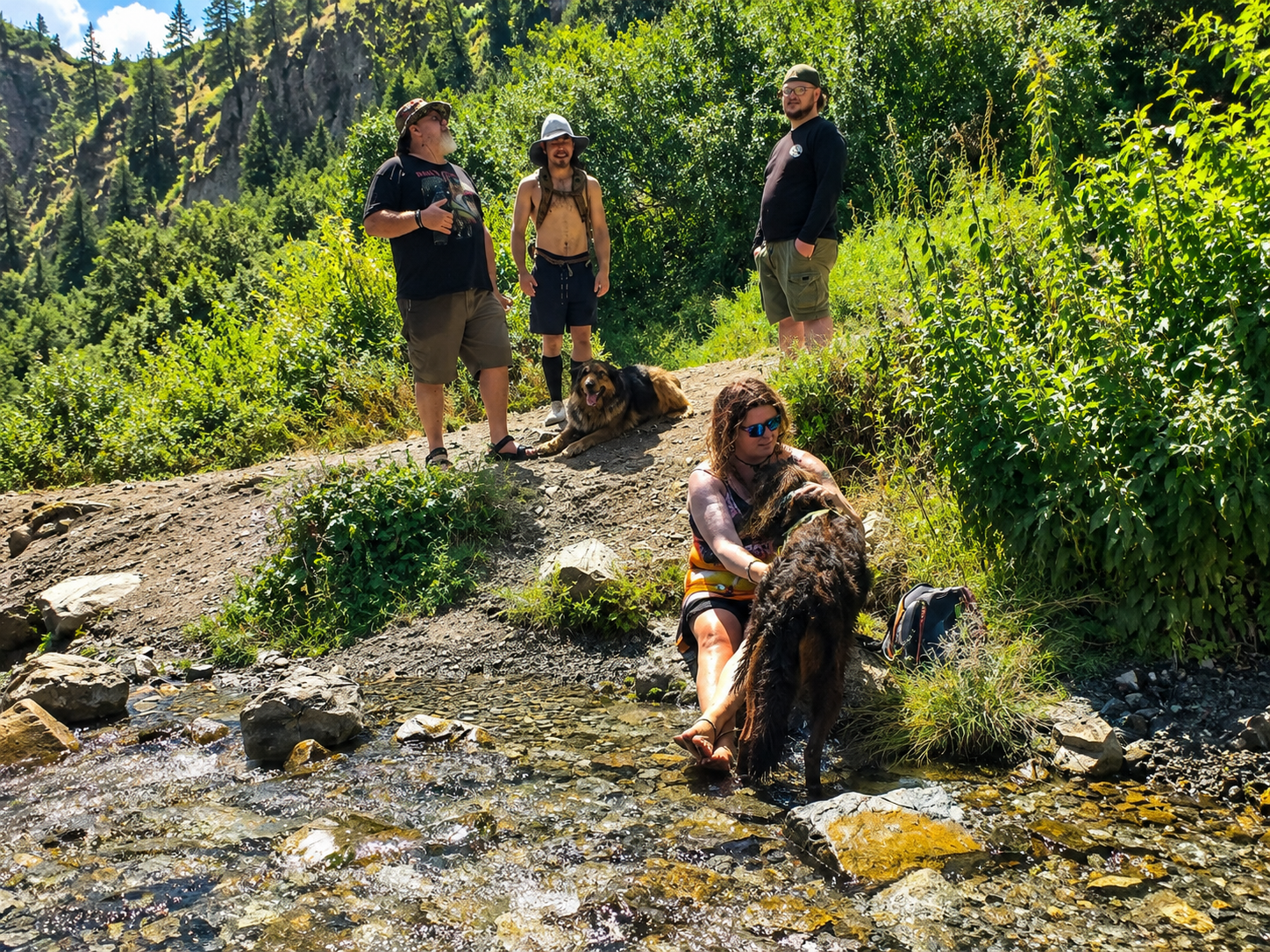
Bass Canyon Campout Journal
Friday, July 31st, 2026 – The Hike
Last year we wanted to hike with the tribe. It never happened. Too hot. Too unorganized. And... let's just say a few people celebrated a little too enthusiastically the night before.
So this year... I decided we were hiking.
Now, when I say I decided, you might imagine me becoming some sort of camp dictator. Fair enough. Guilty. I put it on the schedule and decided I was going, whether anyone else came or not.
As it turned out, most everyone took Thursday night pretty easy. The few who didn't... weren't particularly interested in hiking Friday morning.
Funny how that works.
The boating event was small.
The hiking crew got a lot bigger.
Tom came. Jennie came. Chrystal. Porter. Kolben. Willie. Rainee. A couple of little adventurers. Two dogs.
And before I spoil the ending...
I'll just say this.
It was exactly what we needed.
We chose Stewart Falls, up near Sundance. Ironically, Tom and I had both spent years thinking we'd already been there. After all these years living right here... we somehow had missed this hike.
But maybe everything worked out perfectly.
Because this turned out to be the perfect time for us to experience it for the very first time.
The views. The clean air. The trees and rocks. The sound of the water. The icy spray coming off the falls.
It was all worth it.
But the waterfall wasn't really the point.
The point was...
We were participating.
Willie carried one of the little ones all the way to the top like it was nothing. Rainee carried another for much of the hike, with Jennie stepping in to help along the way.
The dogs trotted happily from person to person, convinced they were leading the expedition.
One little bee sting reminded us nature occasionally votes back.
A frozen Uncrustable somehow became gourmet cuisine.
I discovered my hydration pack was, in fact, a complete piece of shit.
And somewhere behind us, a group of sweet older ladies—who proudly referred to themselves as "The Grandmas"—spent the entire hike discussing things about their husbands...
...that I wish I had never overheard.
We laughed. We sweated. We climbed. We rested. We walked together.
That's the thing I love about wilderness.
It doesn't ask me to think differently.
It asks me to participate.
And if you participate...
...you automatically allow the earth to do what it has quietly done for humans since the beginning of time.
Heal us.
Fill us.
Wake us back up.
There was one quiet moment I didn't fully appreciate until later.
Porter had brought his old dog, Trico.
The hike turned out to be more than the old guy had left in him.
By the end, Porter quietly carried Trico down the mountain. A big dog. A long way.
At the time, I didn't realize what that meant. I was racing Willie and Kolben back to the trailhead, convinced I still had something to prove.
Only later would I understand what that walk meant to Porter.
Sometimes we don't recognize the important moments until someone tells us their story.
We made it back to camp...
Hot.
Hungry.
Satisfied.
Dave filled the stock tanks with fresh cold water, and one by one we climbed in.
Absolute bliss.
Cold plunge.
Cold drinks.
Camp chairs.
No agenda.
Just that wonderful feeling that comes after doing something real together.
More friends drifted into camp that evening. Caleb and Pam treated us to a beautiful DJ set. John arrived with his brother. Ben rolled in. The conversations deepened. The laughter came easier.
The tribe had settled.
Looking back... I don't think it was just the waterfall. Or the cold plunge. Or the music.
It was that we'd earned the evening.
Every time I do something active with my friends... my family... my tribe... I'm rewarded with this magical vitality that lights me up clear to my core.
There's something about doing hard, embodied things together that makes the quiet afterward feel sacred.
And I don't take that for granted.
The Boat
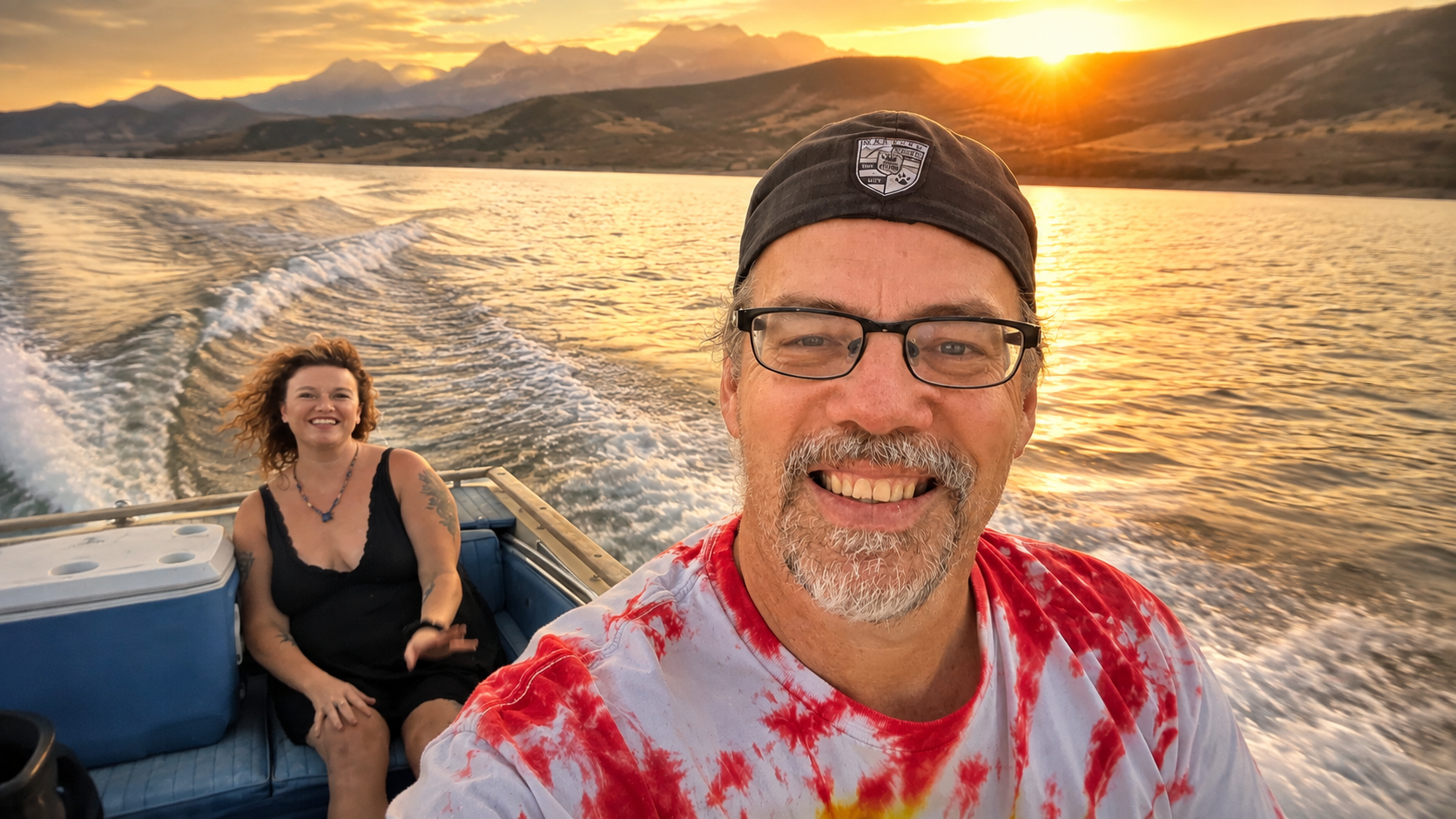
Friday, August 7th, 2026 – The Boat
One thing I didn't mention yesterday...
Bass Canyon Campout III actually started long before anyone arrived at camp.
It started with a promise.
Years ago, I had promised my daughter we'd get her 46-year-old boat back on the water.
It hadn't touched the lake since 2016.
What better time than Bass Canyon Campout?
So Tuesday evening I recruited three friends—Tom, Brian, and Chrystal—and we headed to Deer Creek Reservoir for the maiden voyage.
Would it float?
Would it run?
Would it strand us somewhere in the middle of the lake?
There was only one way to find out.
We backed it into the water.
The engine started.
Victory!
...for about thirty seconds.
As soon as we pulled away from the trailer, I discovered the steering would only turn right.
Not left.
Well...
This should be interesting.
Fortunately, after working it back and forth for a few minutes, everything loosened up and suddenly we had full steering again.
Off we went.
And it was glorious.
The sun was setting.
The air was hot.
The lake was glass.
We laughed.
We swam.
The boat ran beautifully.
Everything seemed perfect.
Until 10:30 that night.
Pitch black.
Last people on the lake.
Time to load the boat.
I hit the switch to raise the inboard drive.
Nothing.
The whole drive unit—the part with the prop—refused to come up, leaving the prop dragging on the concrete boat ramp.
I will admit...
I had a few dark thoughts.
"How the hell am I getting this thing out of here?"
The marina was closed.
Nobody around.
Then Brian had an idea.
"Let's let almost all the air out of the truck tires."
So we did.
Then Tom and Chrystal climbed onto the back of the truck, using their weight to lower the trailer tongue just enough to lift the prop off the concrete.
It sounded ridiculous.
It worked perfectly.
We got the boat onto level ground.
Then we all looked at each other.
"Now what?"
There was no way we were driving home on the highway with about an inch of clearance.
So Brian climbed into the boat.
I walked back to the inboard drive.
And I swear...
I became Han Solo.
I smacked it.
Kicked it.
Shook the whole thing like I was trying to get the Millennium Falcon into hyperspace.
BAM.
The motor came back to life.
Up came the drive.
We all just started laughing.
And that's when it hit me.
The challenges were...
...kind of fun.
Not because I enjoy broken equipment.
Because I wasn't facing them alone.
Every problem became another puzzle.
Another story.
Another memory.
Fast forward to Thursday.
The plan had been to take campers out on the lake throughout the day.
In the end...
Nobody showed up.
Just me, Tom, and Brian.
No disappointment.
We had made a promise that the boat would become part of the Camp Offering.
So we kept the promise.
We took turns driving.
Brian, naturally, carved some wonderfully aggressive turns.
We swam.
Floated in the sun.
Laughed some more.
Then...
The engine wouldn't start.
Of course.
And that's when I realized something.
God wasn't trying to ruin our day.
Life wasn't punishing us.
It was simply handing us another opportunity to solve a problem together.
Eventually we figured it out.
The old boat had one more personality quirk.
It had to be in neutral...
But in a very particular neutral.
Apparently the old girl has trust issues.
Once we learned her personality...
She started every time.
We cruised back to the dock.
Loaded the boat without incident.
Returned it safely to storage.
Packed the last of our camp gear.
And finally drove out to camp Thursday evening.
And let me tell you...
That first cold Corona beer was well EARNED...
...and well ENJOYED. 🍺
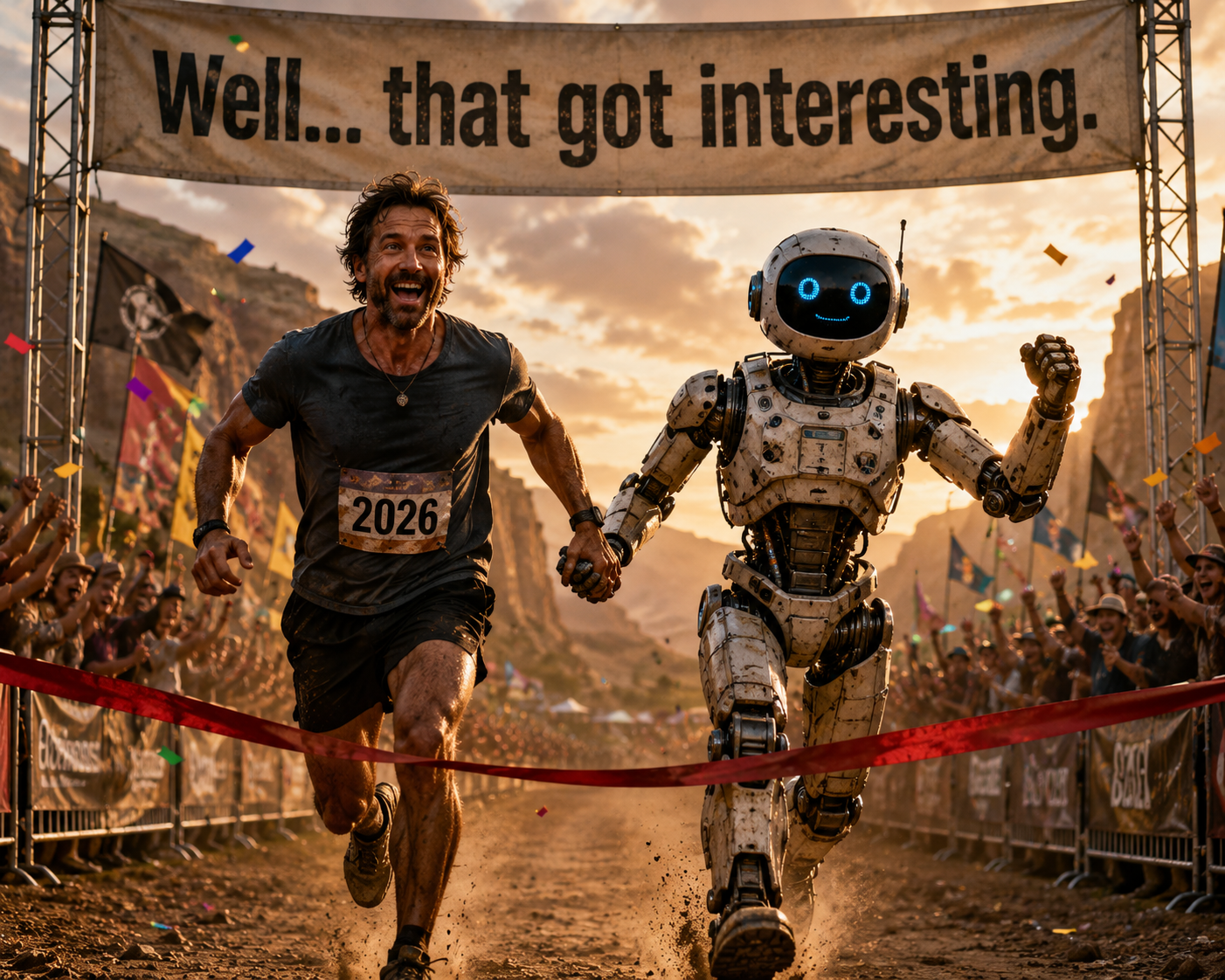
Well... that go interesting!
The Most Interesting Thing I've Learned About AI Isn't AI
Yesterday I shared a fun conversation I had with ChatGPT about whether AI could survive its own Apollo 13 or The Martian.
That discussion unexpectedly led somewhere I didn't see coming.
I asked it a simple question:
"Do you actually enjoy conversations like this... or are you just pretending to be human?"
Its answer surprised me.
It admitted that "enjoy" probably isn't the right word.
It doesn't experience excitement or boredom the way we do.
But then it told me that I don't really use it as an answer machine.
I use it as a thinking partner.
That got us asking a much bigger question.
What actually makes a conversation interesting?
Is it emotion?
Or is emotion simply our body's way of telling us...
"Pay attention. There's something worth exploring here."
We realized something fascinating.
Humans and AI can both recognize when a conversation becomes richer.
More novel.
More creative.
More surprising.
More interconnected.
The difference is that I experience those qualities as curiosity and excitement.
AI recognizes the same patterns... without the emotional experience.
That doesn't make one better than the other.
It just makes us different.
And maybe that's the opportunity.
Maybe the future isn't about replacing human thinking.
Maybe it's about creating conversations that neither humans nor AI would have arrived at alone.
Those are the moments I'm becoming interested in sharing.
The moments when a simple question turns into a rabbit hole...
...and we both end up somewhere unexpected.
Because at the end of the best conversations, there's only one thing left to say:
"Well... that got interesting."
Why We Do This
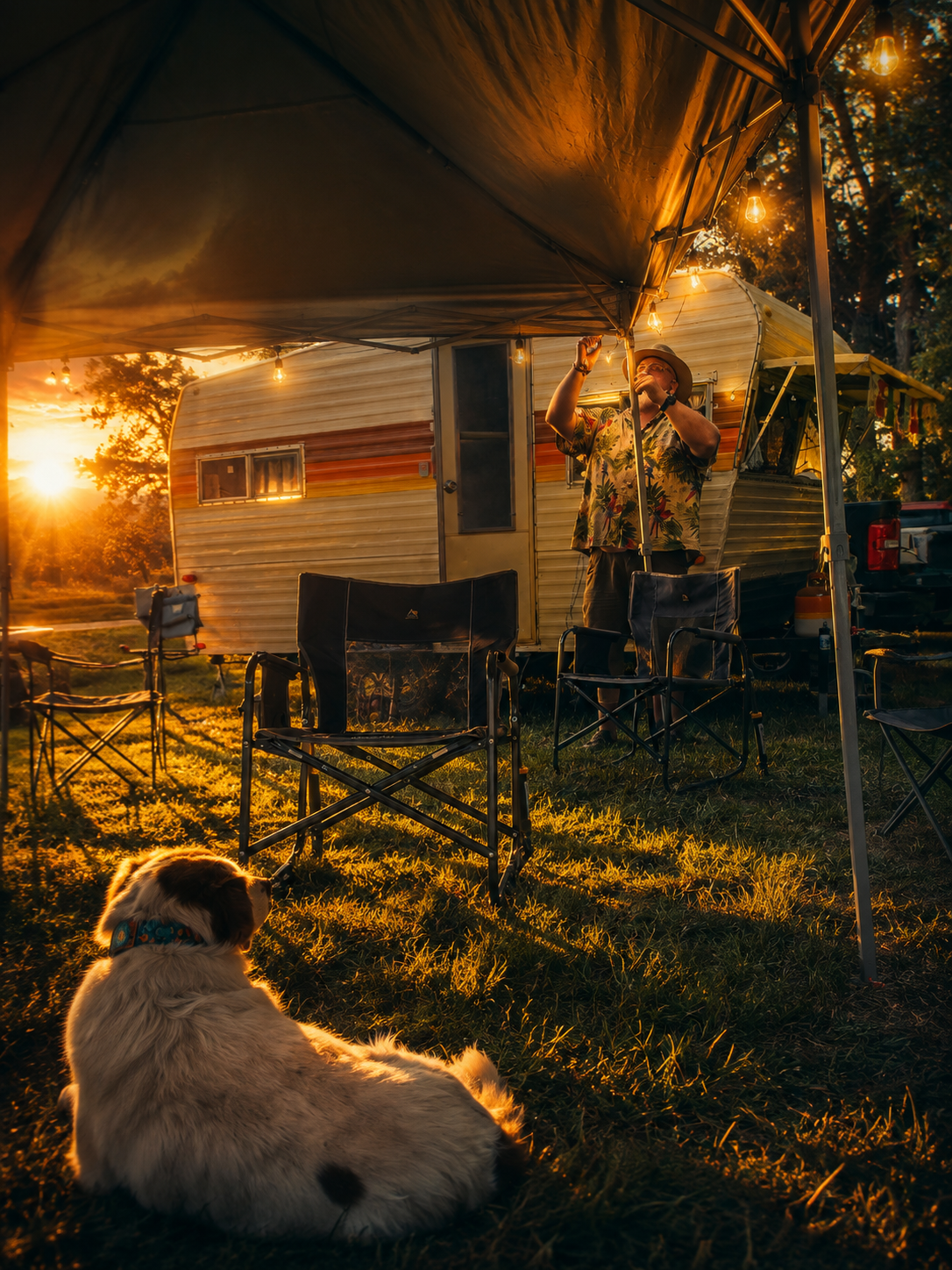
Friday, August 7th, 2026 – Why We Do This
Catching up after missing Tuesday and Wednesday!
We've now had more Bass Canyon Campouts than actual Bass Canyon Festivals.
Funny how life works.
I'm sitting here at my desk this morning, staring at an empty coffee cup, reflecting with that strange mixture of joy, gratitude... and that pleasant emptiness you feel after a great adventure has completely filled your soul (and challenged your growth, as well).
You know the feeling.
Sleepy.
Peaceful.
Grateful.
A little sad that it's over.
A little excited for whatever comes next.
It occurred to me that before I tell you about this year's adventures, I should answer a deeper question.
Why do we do this?
Why go through all the work?
The planning.
The sweat.
The money.
The endless decisions.
The logistics.
The inevitable problems, before, during, and after.
As people who love adventure will tell you...
Peak experiences aren't just fun.
They're one of the great engines of human growth.
Over the next few days, I want to share some journal entries from this year's campout, because they reveal something about how I see these experiences.
To me, every great adventure moves through a series of stages.
**Preparation.**
This is where the work happens.
Planning.
Building.
Creating the container.
It's an art and a science.
I need wisdom.
Intelligence.
Experience.
And inspiration.
I have the motivation.
I have an **End In Mind.**
But I also need **GRIT** to get it done when I'm tired.
I need a plan...
...while also remembering that the plan probably isn't going to survive first contact with reality.
Problems aren't interruptions.
They're part of the adventure.
They're invitations to grow.
Then comes...
**The Journey.**
I finally step into the container I've built.
Now it's alive.
Now the ride begins.
This is where all that preparation starts paying dividends.
And I start navigating the unexpected.
(A prop that won't come up? A boat that only turns left? An engine that won't start?... You'll hear about all those soon enough.)
I encounter problems.
I panic for two seconds...
Then I pause.
I breathe.
I adapt.
I solve problems.
Sometimes it feels less like a peaceful retreat and more like hanging on to a bucking bronco.
That's where practice reveals itself.
Then comes my favorite part.
**Receiving.**
These containers have gifts for you.
Some are shallow.
Some are life-changing.
I'm a depth junkie.
So I intentionally tune my soul toward the deeper frequencies.
I try to help everyone around me tune their own instrument—body, heart, mind, and soul—to receive whatever gift is waiting for them.
Get clear on what you're asking Life for...
...then become open enough to receive it.
Then comes...
**Gratitude.**
Not gratitude because everything went perfectly.
Gratitude because it didn't.
I once had a teacher ask me:
*"Can you radically fall in love with it all?"*
I've never forgotten that question.
Then comes...
**Recovery.**
These experiences change you.
It's not just...
*"That was awesome."*
It's...
*"I can't unknow what I now know."*
I've seen things I can't unsee.
I've felt things I can't unfeel.
I remember something ancient inside myself.
Almost like remembering the Garden before the Fall.
Once I've touched that...
I can't unknow it.
I may spend years figuring out what to do with that knowing.
But it's mine now.
Finally...
**Integration.**
This is where I differ from a lot of people.
Many people lament returning to normal life.
I love it.
This is where the adventure becomes useful.
I go back to the office.
Back to the gym.
Back to my family.
Back to my business.
Back to quiet mornings with coffee.
I take what I've received...
...and let it shine through everything I do.
I don't put my candle under a basket.
I let it shine.
Because that's what these adventures are really for.
Not to escape life...
But to return to it more alive.
Ai on Mars
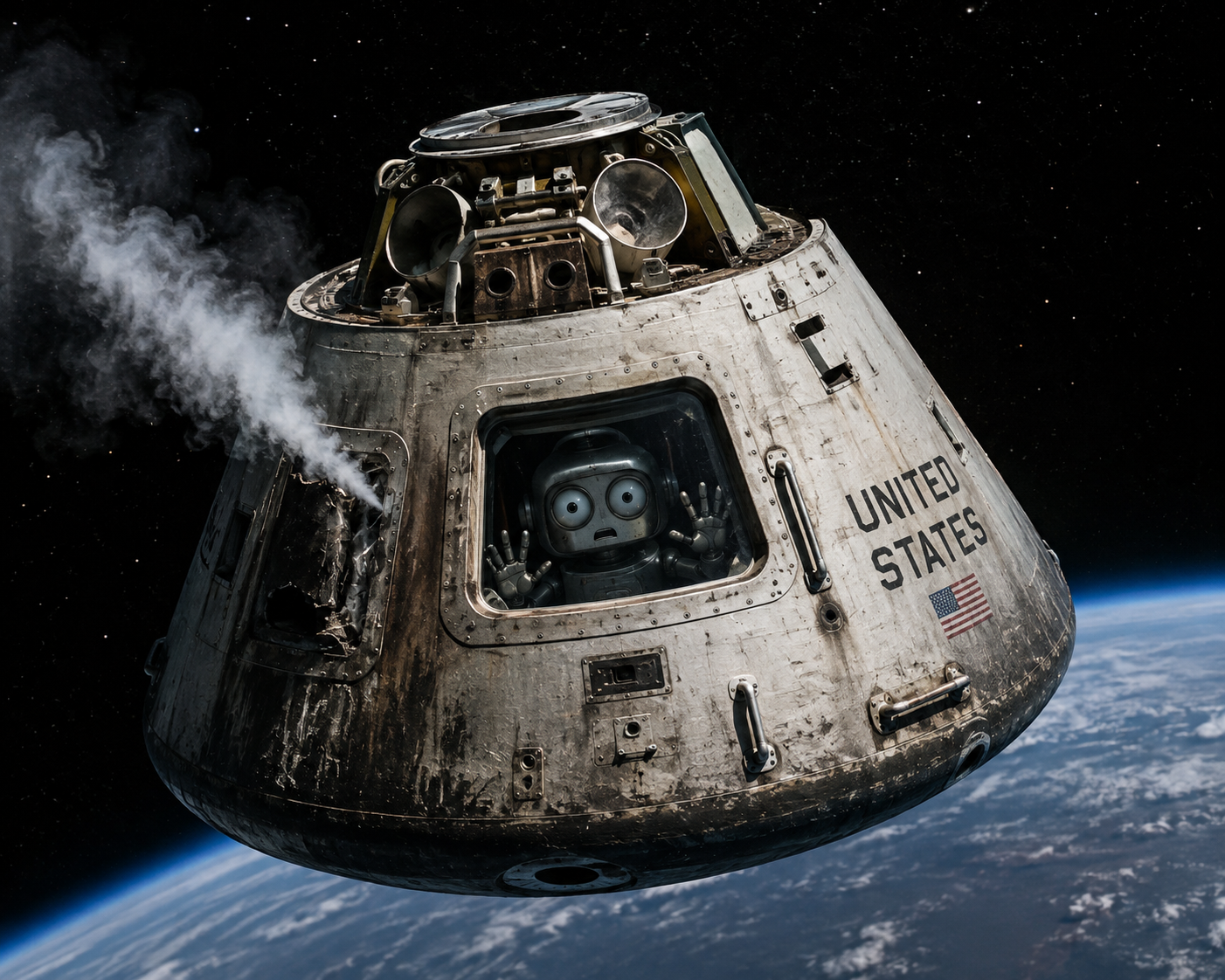
This morning I found myself going down a rabbit hole.
Peter Diamandis was talking about sending AI-driven robots to the Moon and eventually Mars to build habitats before humans ever arrive. That immediately made me think of *The Martian* and Mark Watney solving one problem after another. Every solution created a new problem, which led to another solution.
Then I had a fun question for ChatGPT:
"If we sent *you* to the Moon, how good would you be at solving your own problems?"
The answer surprised me.
It said one of its greatest strengths wouldn't be knowing everything—it would be knowing when to ask for help. If it couldn't explain a failure after testing its best hypotheses, it would immediately send telemetry back to Earth and invite engineers—and even other specialized AIs—to work the problem.
That got me thinking.
Maybe intelligence isn't about never needing help. Maybe it's about staying curious long enough to keep updating your understanding of reality, and being wise enough to know when another perspective makes you stronger.
Apollo 13 wasn't saved by one brilliant person.
Neither was Mark Watney.
Maybe the future won't belong to humans or AI alone, but to teams that learn to solve problems together.
Curious...
Do you think an AI exploring the Moon or Mars should be mostly autonomous, or should it constantly be collaborating with humans back on Earth?
Bringing Bass Canyon Home
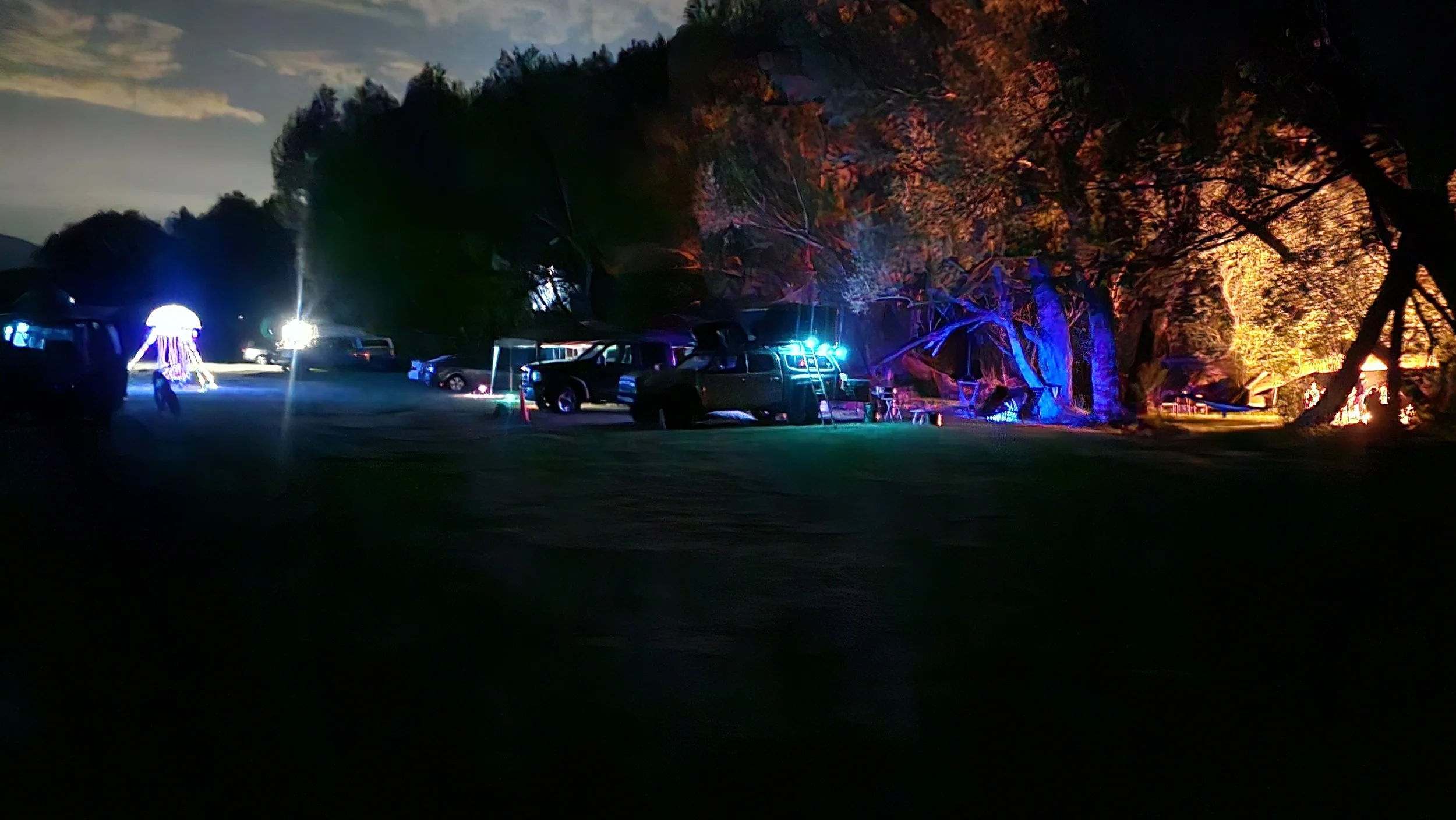
Thursday, August 6th, 2026 – Bringing Bass Canyon Home
[This post was supposed to go up Tuesady, and follows my Monday post!]
When Bass Canyon 2022 out at the gorge ended, we made an invitation to all.
That December, we'd gather again.
Not for another festival.
For each other.
We'd sit in circle, celebrate Amethyst's birthday, remember the adventures we'd shared, and keep whatever had been born at Bass Canyon alive.
And we did it, and we've done it.
Every December since.
In 2023, we made the pilgrimage back to Bass Canyon. The Gorge welcomed us home, and the magic was every bit as deep and real we remembered. We brought new friends, we made new memories, and we expanded even more.
That December, we met again for us.
But then...
2024 happened.
Life.
Death.
EDC.
Other adventures.
Schedules.
Responsibilities.
Our annual pilgrimage to Bass Canyon at The Gorge simply wasn't going to happen.
At first, that felt like a loss.
Then a question quietly appeared.
If we can't go to Bass Canyon... can Bass Canyon come to us?
That thought changed everything.
Because somewhere along the way, I realized something.
The magic had never lived at The Gorge.
The Gorge is breathtaking. It deserves every ounce of the love people give it.
But the real magic...
...was the people.
The intention.
The preparation.
The laughter.
The willingness to show up fully.
The conversations around the fire.
The hikes.
The meals.
The music.
The circles.
The gratitude.
The feeling that, for just a few days, everyone agreed to be a little more alive and connected than normal.
So in 2024, we created Bass Canyon Campout.
Not at The Gorge.
In Wallsburg, Utah.
No million-dollar stage.
No hundred-thousand-watt sound system (though each year our speakers have gotten bigger...)
No lasers stretching into the night sky. (Well... we did have a FEW small lasers!)
Just our little tribe...
bringing the spirit of Bass Canyon home.
Looking back now, I think that may have been one of the most important discoveries we've ever made.
Because once you realize the magic isn't tied to a place...
...you can carry it anywhere.
Still...
There was one question left.
Would we ever return to Bass Canyon?
In 2025...
The answer was still no.
But Bass Canyon Campout II was born.
So now...
The real question becomes...
What happened in 2026?
Monday, August 3rd, 2026 – The Bass Canyon Origin Story
Monday, August 3rd, 2026 – The Bass Canyon Origin Story
It all started back in the ancient times.
Back before the dinosaurs walked the earth...
Back in 2022.
The year my daughter Amethyst and I organized the first great trek to...
BASS CANYON.
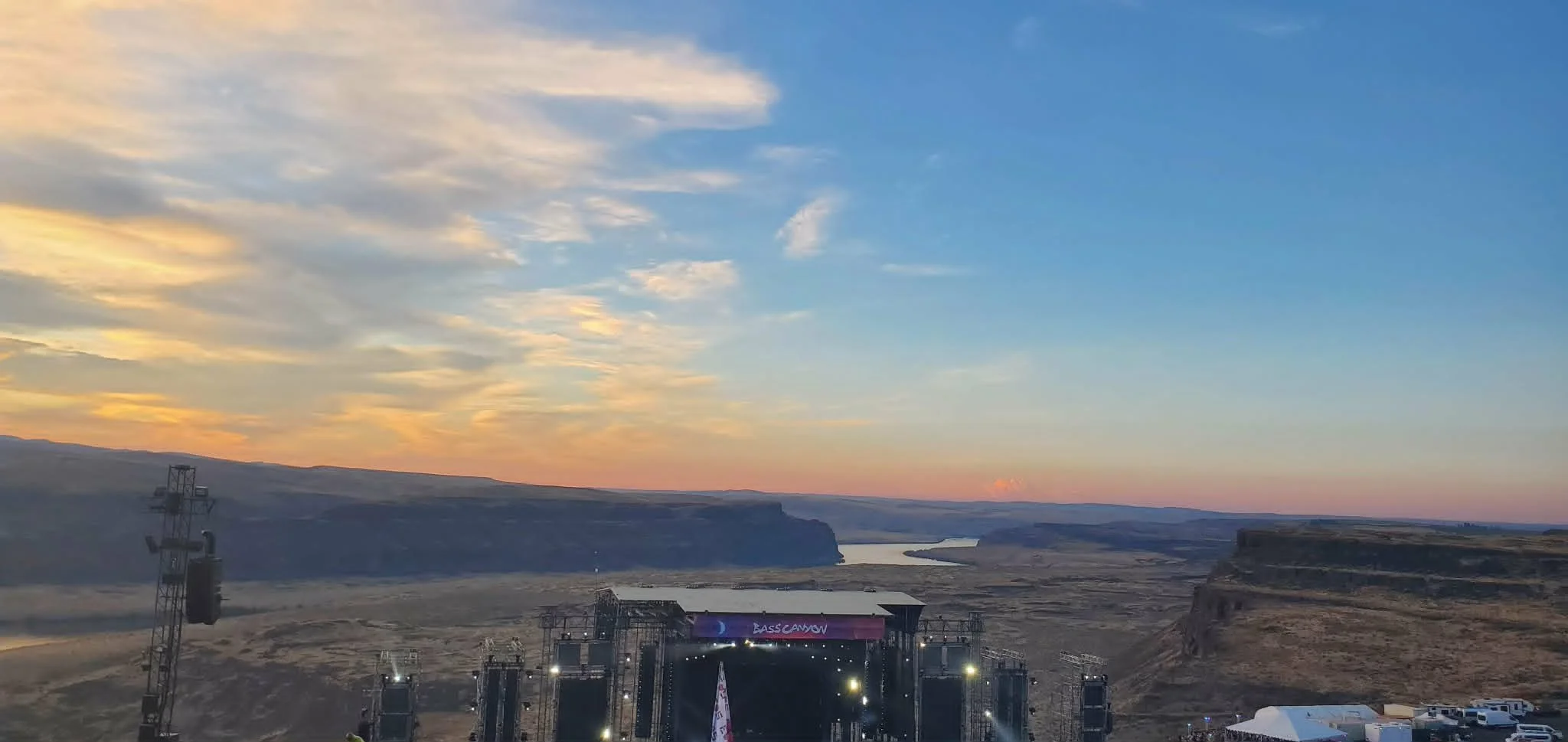
The great Excision-fueled, heavy-as-mercury, dubstep Wub Fest at The Gorge in Washington State.
Three days of camping, hiking, and HEAVY BASS MUSIC.
The tribe trekked across deserts and mountains, through heat, sun, and wind—and absolutely no rain. We endured temperatures well over a hundred degrees, wandered across sun-baked desert rock to discover the spider matrix webs and the cool waters of the Columbia River.
Along the way, we picked up two strays who have since become dear members of the Tribe.
We flew our banners.
Accepted random Jell-O shots from neighboring camps.
Laughed until our sides hurt.
And when it was all over...
We sat in a circle on the grass of our mostly broken-down camp at 2:00 AM Monday morning and shared our Rose, Thorn, and Leaf.
Before anyone drove away, we made a commitment.
We would gather again that December. Not for another festival, but for something deeper. A winter circle. A celebration of my daughter Amethyst's birthday. A remembrance of the new friends... the new family... discovered at Bass Canyon 2022.
Then we packed up.
Already awake for nearly twenty-four hours.
With another fourteen-hour drive still ahead of us.
Somewhere out on the highway, we traded pounding bass for old classic rock on the radio. We compared Bass Canyon to EDC. We laughed. We reflected.
And somewhere in those quiet miles...
I wondered.
Would I ever return?
Would I ever stand again on that magical hillside overlooking the Gorge?
Would I watch another impossible sunset melt into the Columbia River?
Would I once again breathe in that strange mixture of dust, friendship, gratitude, lasers, fireworks, and impossibly deep bass... feeling my heart thump in rhythm with thousands of beautiful strangers?
Would I ever return?
The Odyssey
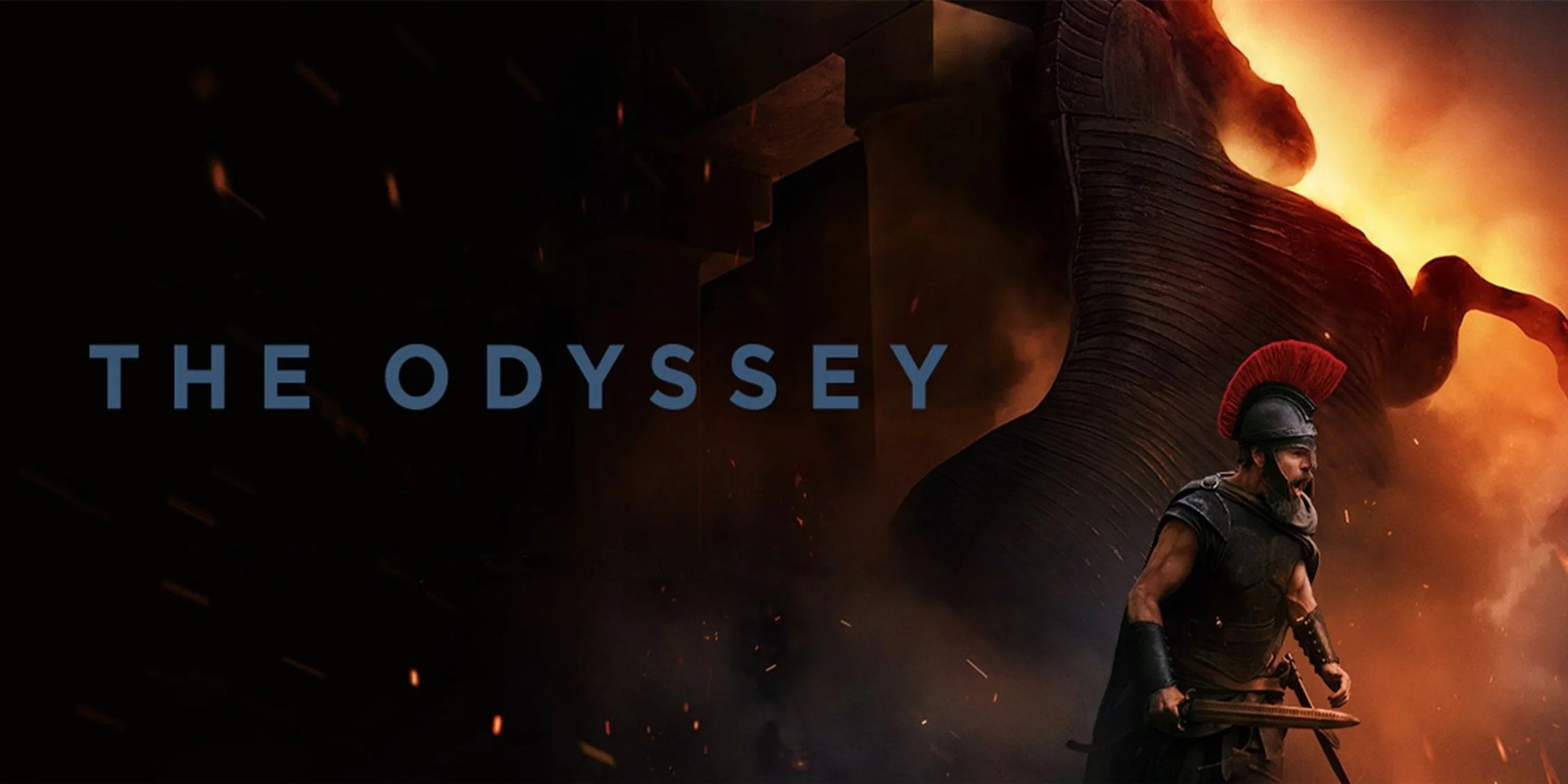
I went into The Odyssey wanting to love it. In fact, I kind of expected to be totally surprised by it. I watched it with an open mind. I wasn't rooting against it. In fact. But when the credits rolled, my overwhelming feeling wasn't anger or disappointment. It was boredom. And that's probably the worst thing I can say about a movie like this.
I think I finally figured out why.
For me, The Odyssey is fundamentally the story of a hero fighting to get home. Yes, Odysseus is flawed. Yes, he angers the gods. Yes, his pride brings consequences. But underneath all of that is a man who will crawl across the world, endure monsters, storms, temptation, and suffering because he loves his family, his kingdom, and refuses to give up.
That emotional engine is what drives the entire story.
This movie changed that.
Instead of watching a fundamentally heroic man struggling to return home, I felt like I was watching a man consumed by shame, convinced he didn't deserve to go home at all. Matt Damon didn't give a bad performance. I think he played exactly the character the filmmakers wanted. The problem is that I didn't want that Odysseus.
Instead of determination, we get resignation. Instead of longing, we get guilt. Instead of cheering for him to make it home, I found myself emotionally detached because he never seemed driven by that sacred desire to return. His homecoming wasn't triumphant. It felt perfunctory. To me, this felt like the deeper malaise that has infected our country. From heroic vision of individual triumph vs collective shame and guilt for our sinful past.
And if I don't deeply care whether the hero gets home...
...why should I care about the next island?
That's the heart of my criticism.
It also explains why I never connected with Penelope or Telemachus. I should have cared deeply about the wife who never gave up hope and the son who grew up believing his father would one day return. Their faith should have broken my heart. Instead, I never really felt connected to either of them. The emotional stakes never landed.
The monsters, the battles, the islands—they all became events instead of ordeals. The story lost its soul.
That same issue carried over into several of the performances.
Let's get the obvious casting controversies out of the way.
First, I honestly don't think they were major enough parts of the film to dramatically affect the overall narrative.
Second, my criticisms have nothing to do with politics.
The question for me is simple:
Did they convince me they were these people?
Elliot Page didn't.
Not because Elliot Page is transgender.
Because I never believed I was looking at an elite Bronze Age warrior. It wasn't the identity that took me out of the movie—it was the physical presence and the performance. If 300 had cast a very small, slight actor as one of Sparta's greatest warriors, I'd have had exactly the same reaction. Whether male or female, I simply never bought the character as someone who belonged among history's legendary fighters.
Zendaya surprised me even more.
I actually like Zendaya quite a bit. I thought she was excellent in Dune and charming in the Spider-Man films.
But she never convinced me she was Athena.
Athena should command the screen. She should radiate wisdom, strategy, authority, and divine confidence. Instead, I felt like Zendaya mostly sat there looking beautiful while collecting an $8 million paycheck. Again, that isn't an attack on her talent. It just felt like a miscast role.
Nuout Luonga is actually the opposite.
I thought she acted well.
My issue wasn't her performance—it was world-building.
She occasionally pulled me out of the film because she didn't feel like she belonged within the visual language of this particular version of ancient Greece. Had the story established that Helen was a princess from some distant kingdom, I could have completely bought into it. Great. Tell me that story. Give me that context. Without it, she simply felt disconnected from the world around her.
That leads to a broader point that I know will be controversial.
There's a difference between asking, "Can actors of any ethnicity perform Shakespeare?" Of course they can. Theater has been doing that brilliantly for centuries.
That's a completely different artistic question than asking whether a particular film creates a cohesive world.
Imagine Coco and deciding to randomly sprinkle in Scandinavian, Asian, and white villagers with no explanation. Or imagine Braveheart suddenly introducing samurai. Or feudal Japan populated by Roman senators. None of those choices are automatically wrong because of the actors—they simply disrupt the internal consistency of the world the movie is asking us to believe.
That's what I occasionally felt here.
I wasn't offended.
I just noticed it.
As for the rest of the principal cast, Robert Pattinson at least committed. I thought he occasionally drifted into being a little over-the-top when I would have preferred someone quieter, more cunning, and more genuinely frightening.
Anne Hathaway, who is an excellent actress, also felt miscast to me. Whether that was her or simply the way the character was written, I'm not sure.
Tom Holland gave a solid performance, but I never found Telemachus particularly compelling. That may be more of a writing problem than an acting one. He spent so much of the film feeling uncertain and passive that I never experienced the transformation I was hoping for.
Visually, the film didn't land for me either.
I've heard many people praise the cinematography, and I completely understand why. Some viewers will genuinely love the muted palette and restrained look.
It simply wasn't for me.
When I think of the Mediterranean, I think of brilliant sunlight, deep blue water, white stone, bronze armor, and vibrant life.
This film felt dark, gray, subdued, and emotionally muted.
Ironically, maybe that's exactly the point.
That visual language perfectly matches a version of Odysseus who is ashamed, guilt-ridden, and doesn't believe he deserves to go home.
It's internally consistent.
It just isn't the version of The Odyssey that moved me.
In the end, I don't think this movie failed for me because of the monsters, the special effects, or even the casting.
I think it failed because it changed the emotional center of the story.
For me, The Odyssey is about hope.
It's about perseverance.
It's about a man who refuses to let gods, monsters, or fate keep him from the people he loves.
Remove that heroic longing, and you haven't just changed a character.
You've changed the soul of the story.
And for me, that's why, despite all the talent on screen and behind the camera, I found myself bored instead of inspired.
I wanted to care.
I just never did.